Learn what analytical buyers need before they’ll commit.
Agenda:
- Understanding the Explanation vs Proof Gap
- The Gateholders Internal Monologue when Analysing your Page
- The Stages Where Proof Becomes Critical
- The Types of Proof That Actually Work for Analytical Buyers
- How Detailed Proof Should Be
- Where Proof Needs to Live Throughout the Journey
- How to Source Credible Proof from Customers
- The Copy Framework for Presenting Proof Without Sounding Salesy
- Handling Lack of Proof for New Products
- The Relationship Between Proof and the Six Risk Types
- Common Proof Mistakes That Destroy Credibility
- Why Proof Builds Trust with Buyers Who’ve Been Disappointed Before
- The Conversion Impact When Proof Is Done Right
- The Bottom Line
Your product pages are detailed. You’ve explained the mechanism thoroughly. You’ve shown exactly how it works and why it’s different from alternatives.
Gateholders are reading everything. Scroll depth is 80%. Time on page is over two minutes. They’re consuming every word.
Then they leave without buying.
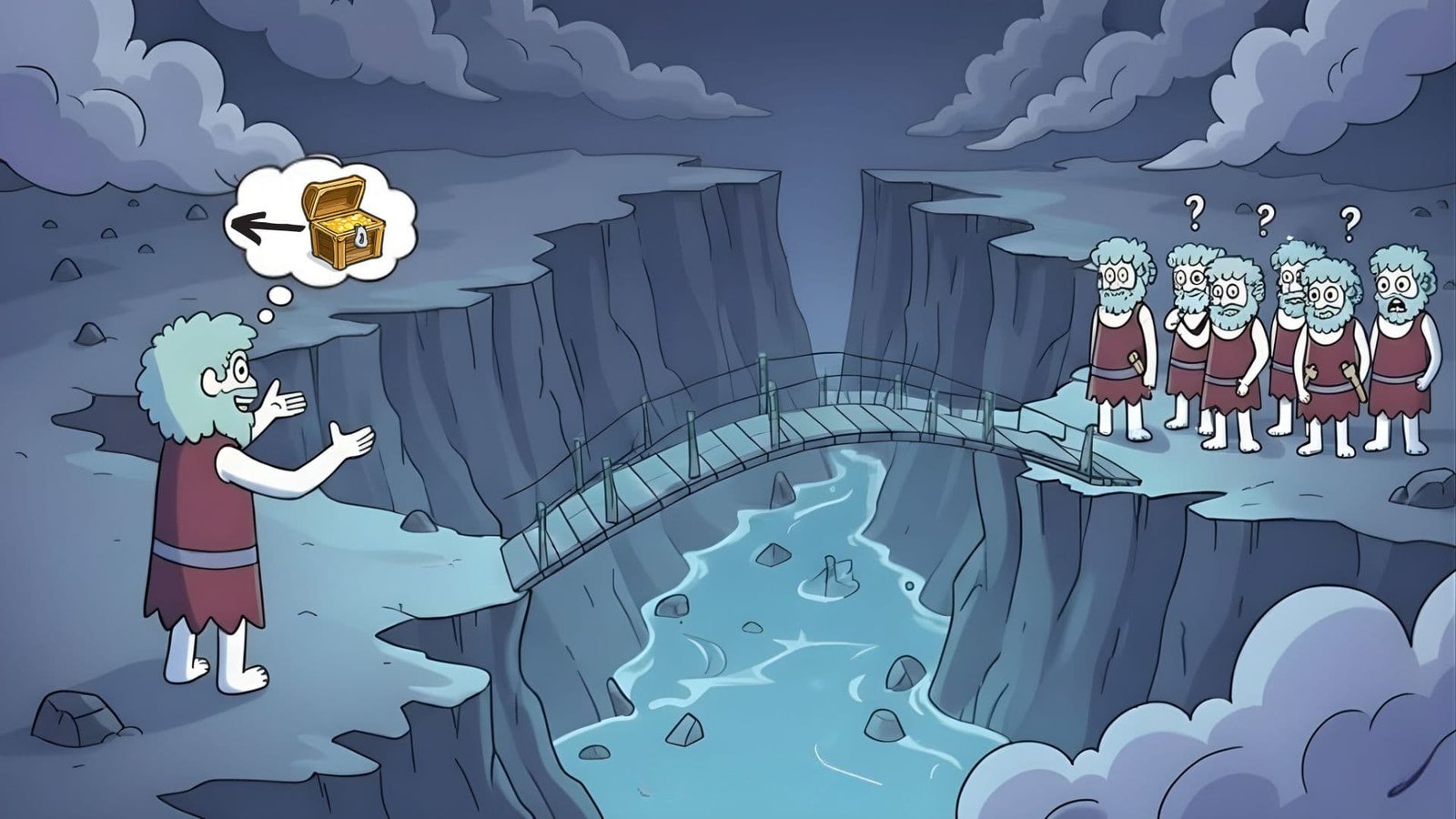
The problem isn’t that they don’t understand your solution. It’s that understanding isn’t enough. They need proof it actually works in practice, not just in theory.
You’ve explained the mechanism. You haven’t proven the results.
Understanding The Explanation vs Proof Gap
Understanding The “Explanation vs Proof Gap”
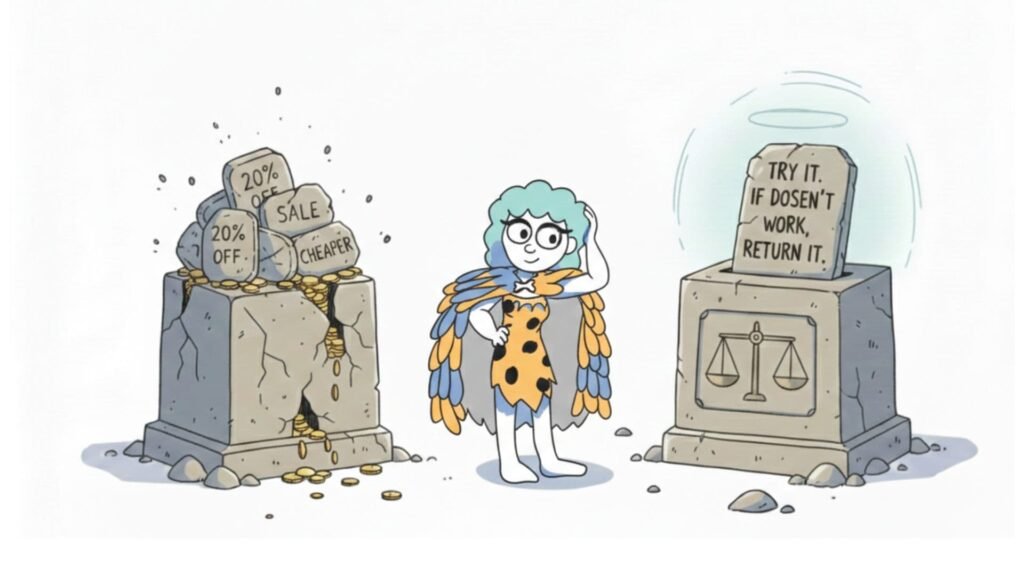
Explanations satisfy intellectual curiosity. Proof satisfies scepticism built from past disappointments.
Gateholders have tried solutions before. Those solutions had compelling explanations too. Logical mechanisms. Clear reasoning. Plausible theories.
Then they failed in practice.
So when Gateholders read your detailed explanation and think “this makes sense mechanically,” they immediately follow with “but so did the last three things I tried, and they burned me.”
The explanation answers: How does this work?
The proof answers: Has this actually worked for people like me who had problems like mine?
Both are necessary. Explanation without proof leaves them intellectually convinced but practically hesitant. They understand your logic but can’t overcome the fear that reality won’t match theory.
That hesitation is what creates high scroll depth with low purchase rate. They’re reading to the end hoping to find proof. When they don’t find it, or find weak proof, they leave thinking “I need to keep looking for something better.”
The Gateholders Internal Monologue when Analysing your Page
Gateholders when on your product page, they read your explanation. Their internal dialogue begins:
“Okay, this makes logical sense.”
“The mechanism addresses the root cause properly.”
“But I’ve been convinced by logical explanations before.”
“Where’s the evidence this actually works in practice?”
They scroll looking for proof. Testimonials. Case studies. Data. Results.
If what they find is generic praise without specifics, their scepticism activates:
“Five stars, ‘great product’ – what problem did it solve?”
“‘Life changing’ – how exactly? What changed?”
“‘Highly recommend’ – based on what outcome?”
These testimonials prove people bought the product. They don’t prove it solved the specific problem the Gateholder is facing.
Without that proof, they think: “A better solution probably exists. I’ll keep looking.”
The diagnostic signals are clear: high scroll depth means they’re engaged. Low purchase rate means they’re not convinced. The gap between engagement and conversion is missing proof that addresses their specific doubt.
The Stages Where Proof Becomes Critical
Proof isn’t just for the final purchase decision. It’s needed throughout the journey.
Stage 2: Problem Aware
They’re trying to diagnose what’s actually wrong. Generic explanations don’t help because they can’t tell if the explanation applies to their specific situation.
What doesn’t work: “This solves back pain.”
What works: “I had lower back pain that got worse after sitting for two hours. Three other solutions didn’t work because they targeted muscles, not disc compression. This addresses disc spacing mechanically, and my pain reduced 60% within two weeks. I can now sit through full workdays.”
That testimonial proves the mechanism works for a specific problem variant. Gateholders reading it can assess: “Do I have the sitting-related variant? Then this proof applies to me.”
Stage 3: Solution Aware
They’re evaluating different approaches. Everyone claims their mechanism works.
What doesn’t work: “Revolutionary approach that really works!”
What works: “We tested standard compression therapy versus our traction-based approach with 200 subjects experiencing chronic pain. Standard compression showed 15% improvement. Our approach showed 58% improvement. Here’s the methodology and full results.”
Comparative proof showing your mechanism outperforms alternatives. Not claims. Data.
Stage 4: Product Aware
They understand your mechanism and believe it could work. They’re comparing you to competitors with similar approaches.
What doesn’t work: Testimonials from obviously different customer types.
What works: Case study from someone in their exact industry, facing their exact problem, who tried similar solutions before yours. The similarity proves relevance.
Stage 5: Most Aware
They’re ready to buy but experiencing final doubt. “What if this is another expensive mistake?”
What doesn’t work: More explanation about the mechanism they already understand.
What works: Results data showing not just that it works, but how long until results appear, what percentage of users see improvement, what outcomes look like long-term.
Proof needs to match the stage-specific doubt. Early stages need proof of problem relevance. Later stages need proof of superior results.
The Types Of Proof That Actually Work For Analytical Buyers
Not all proof carries equal weight. Research identifies several types with varying effectiveness:
Results-Based Testimonials
These connect specific problem to measurable outcome through your mechanism.
Structure: “I had problem X. Tried solutions A and B which failed because of reason Y. Your product addresses Y through mechanism Z. After timeframe, my outcome improved by specific amount.”
Why it works: Addresses problem specificity. Shows mechanism in action. Provides measurable result. Gateholders can assess relevance.
Example: “I couldn’t sleep past 4am for six months. Tried melatonin and sleep restriction, neither worked because my cortisol spiked early morning. Your adaptogen blend targets cortisol regulation specifically. Within three weeks, I’m sleeping until 6:30am consistently.”
Process Documentation
This shows the mechanism operating in real conditions, not just theory.
Format: Before state, intervention steps, observable changes, final outcome. Often with timestamps or measurements.
Why it works: Proves the mechanism you explained actually functions when implemented. Not just plausible, but verified.
Example: Case study showing baseline measurements, implementation of your solution with specific steps, weekly progress data, final results with comparison to baseline.
Expert Validation
Third-party credible authorities confirming your mechanism and results.
Format: Industry expert, researcher, or specialist explains why your approach works and validates your claims.
Why it works: Borrows credibility from recognised authorities. Gateholders trust expert analysis over marketing claims.
Research shows 70% of consumers trust expert endorsements. For Gateholders, that number is higher because they value technical credibility.
Comparative Analysis
Side-by-side data showing your solution versus alternatives or standard approaches.
Format: Same problem, different solutions, measured outcomes. Shows your superior performance with evidence.
Why it works: Answers the “why you versus cheaper alternatives?” question with data, not claims.
Example: “We tested our formula against three leading competitors. All claim to reduce inflammation. Lab results: Competitor A reduced markers 12%. Competitor B reduced 18%. Competitor C reduced 15%. Our formula reduced 34%. Here’s the methodology.”
Aggregate Results Data
Overall statistics from your customer base showing pattern of results.
Format: “X% of customers report Y outcome within Z timeframe.”
Why it works: Proves individual results aren’t outliers. Shows consistent mechanism performance across diverse users.
Research indicates 79% of consumers trust reviews as much as personal recommendations. For high-consideration purchases like those Gateholders make, this trust is even more critical.
The transparency principle matters: 86% of consumers say authenticity is important when deciding which brands to support. Gateholders can detect manufactured testimonials instantly.
How Detailed Should Proof Be
The challenge: too little detail seems vague and untrustworthy. Too much detail overwhelms and loses attention.
The balance comes from optimised word selection that influences preconceived beliefs without repetitive information.
Referring to the Gateholder profile: they need mechanism shown through specs and features, but presented cleverly. Not just “500 grams lighter” but “500 grams lighter whilst maintaining higher durability, meaning easier handling during extended use without sacrificing strength.”
For testimonials, the detail hierarchy:
Essential details:
- Specific problem they faced
- Why previous solutions failed mechanically
- How your solution addresses that failure point
- Measurable outcome with timeframe
- Relevant context about their situation
Optional details:
- Exact numbers if impressive
- Unexpected benefits discovered
- Long-term results updates
Unnecessary details:
- Emotional descriptions without outcomes
- Generic praise without specifics
- Background information unrelated to problem-solving
The goal: every detail must serve logical verification. If it doesn’t help Gateholders assess whether the proof applies to them and validates the mechanism, remove it.
Where Proof Needs To Live Throughout The Journey
Proof can’t just exist on one page. Strategic placement throughout the customer journey prevents leakage at multiple decision points.
Product pages: Results-based testimonials directly under mechanism explanation. The sequence matters: explain how it works, then immediately prove it works.
Dedicated case study pages: Deep-dive process documentation for those who want comprehensive proof. Optional depth without cluttering main pages.
Comparison pages: Comparative analysis showing your solution versus alternatives. Answers the “why not the competitor?” question with evidence.
Homepage: Aggregate results data showing overall effectiveness. Establishes baseline credibility before they dive into specifics.
Social media content: Expert validation and customer success stories. Builds proof awareness before they reach purchase decision.
Email sequences: Progressive proof disclosure. Early emails share customer stories. Later emails provide data and case studies as interest deepens.
The strategic principle: make encountering proof unavoidable. Place it everywhere they might be evaluating whether your solution actually works.
How To Source Credible Proof From Customers
The quality of proof depends on sourcing methodology. Generic “how did we do?” surveys generate generic praise. Specific questions generate specific, credible proof.
The interview framework that works:
What specific problem were you trying to solve? This establishes problem relevance for other Gateholders.
What had you tried before that didn’t work? This shows you understand common failure points and your solution addresses them.
Why did those previous solutions fail? This proves you grasp the mechanism, not just symptoms.
What made you decide to try our solution? This reveals what proof convinced them, helping you understand what works.
How long until you noticed improvement? This sets realistic expectations for new customers evaluating whether to wait for results.
What measurable changes have you seen? This provides the specific outcomes Gateholders need to assess relevance.
How has this affected your daily life or work practically? This connects abstract improvements to concrete benefits.
Would you recommend this to someone facing similar challenges? Why? This provides peer validation in the customer’s own words.
Research shows detailed testimonials convert 62% better than generic star ratings. The questions above generate that detail naturally.
Timing matters: reach out 30, 60, and 90 days post-purchase. Different timeframes reveal different proof points. Early results prove quick wins. Later results prove sustained effectiveness.
The Copy Framework For Presenting Proof Without Sounding Salesy
How you present proof determines whether it builds credibility or triggers scepticism.
The structure that works:
Lead with the problem in customer’s words “I couldn’t focus for more than 20 minutes without mental fatigue.”
This establishes relevance. Gateholders reading can immediately assess: “Do I have that problem?”
Explain what didn’t work and why “I tried caffeine which helped temporarily but caused crashes. I tried breaking tasks into smaller chunks but the fatigue persisted regardless of task size.”
This validates their experience. Shows the customer understands mechanism failure, not just symptom treatment.
Describe how your solution addresses the root cause “This supplement targets mitochondrial function specifically. The ingredient combination increases ATP production at cellular level.”
This connects mechanism to the problem mechanically, not emotionally.
State measurable outcome with timeframe “Within two weeks, I could maintain focus for 90-minute blocks. After a month, full workday concentration without the 2pm crash.”
Specific numbers and timeline. Gateholders can assess whether that improvement level justifies trying it.
Optional: Add unexpected benefit or long-term update “Bonus: my sleep quality improved too, likely from better energy regulation throughout the day.”
This provides additional value without being the primary claim.
The language patterns that signal authenticity versus marketing fluff:
Authentic proof uses:
- Specific numbers and timeframes
- Technical terminology showing understanding
- Admits what it doesn’t solve
- Describes process, not just outcome
- Casual language from actual customers
Marketing fluff uses:
- Superlatives without metrics: “amazing,” “incredible,” “life-changing”
- Vague timeframes: “quickly,” “soon,” “almost immediately”
- Universal claims: “works for everyone,” “solves all”
- No mechanism mention
- Overly polished corporate language
Research shows 59% of consumers avoid brands publishing content with grammar and spelling mistakes. But that doesn’t mean testimonials need corporate polish. Authentic customer voice with minor imperfections is more trustworthy than perfectly crafted marketing copy.
Handling Lack Of Proof For New Products
What if you’re launching a new product and don’t have customer results yet?
The strategies that work:
Founder/team testing results Document your own experience using the product. If you built it to solve your problem, show your results.
Format: “I spent six months developing this because I personally struggled with X. Here’s my baseline data, here’s my testing process, here’s my outcome.”
Why it works: Proves you have skin in the game. Shows mechanism tested in real conditions, even if sample size is small.
Beta tester case studies Recruit small group to test before launch. Document their process thoroughly.
Format: “We gave early versions to 20 people facing similar challenges. Here’s what they reported.”
Why it works: Provides initial proof of concept. Shows multiple people, not just you, saw results.
Expert validation Get specialists or authorities in your field to assess and endorse your approach.
Format: “We had three industry experts review our methodology. Here’s their technical assessment.”
Why it works: Borrows credibility when you can’t yet show customer proof.
Research citations If your approach is based on studies or scientific evidence, cite those sources directly.
Format: “Our formula uses ingredients shown in X study to produce Y outcome. While we’re new, the mechanism is research-validated.”
Why it works: Proves the mechanism works in general, even if you can’t yet prove your specific product.
Transparent roadmap Admit you’re early and commit to publishing results as customers use the product.
Format: “We launched two months ago. We’ll publish aggregate results at 6-month mark. Here’s how you can track progress.”
Why it works: Honesty builds trust. Shows confidence you’ll have proof worth sharing.
Critical principle: never fake proof. Gateholders will verify. Getting caught destroys credibility permanently. Better to acknowledge limited proof than manufacture false testimonials.
The Relationship Between Proof And The Six Risk Types
Proof doesn’t just address performance doubt. It reduces multiple perceived risk categories that block purchase decisions.
Financial Risk: Will this be wasted money?
Proof that addresses this: ROI testimonials showing cost-benefit. “I spent £300 but saved £2,000 in avoided expenses.” Payback period data. Value retention over time.
Why it works: Shows the financial equation makes sense, not just that the product functions.
Performance Risk: Will this actually work?
Proof that addresses this: Results data showing it works in practice. Success rate percentages. Before/after measurements. Case studies with verified outcomes.
Why it works: Proves theory translates to reality. Addresses the “sounds good but will it work for me?” doubt.
Time Risk: Will this waste my time?
Proof that addresses this: Testimonials mentioning implementation ease. “Setup took 15 minutes.” “Saw results within first week.” Learning curve data.
Why it works: Shows the time investment is reasonable and returns appear quickly enough to justify effort.
Psychological Risk: Will I feel good about this decision?
Proof that addresses this: Testimonials from customers with similar values. “Aligns with my sustainability commitment.” “Fits my approach to problem-solving.”
Why it works: Validates that the purchase reflects well on their judgement and self-perception.
Social Risk: How will others perceive this?
Proof that addresses this: Peer testimonials from similar professionals or demographics. “Other CTOs facing this challenge chose this solution.”
Why it works: Shows respected peers made this choice, reducing fear of judgement.
Privacy/Security Risk: Is my data safe?
Proof that addresses this: Security certifications. Trust badges. Transparency about data handling. Third-party audits.
Why it works: Transfers trust from recognised authorities to your platform.
Research shows social proof addresses risk through the uncertainty principle: the stronger the uncertainty, the stronger the social proof influence. Gateholders operate in high uncertainty because past solutions failed. This makes proof exceptionally powerful for overcoming their hesitation.
For high-consideration B2B purchases typical in Gateholder territory, third-party validated testimonials carry exceptional weight because they reduce multiple risk types simultaneously.
Common Proof Mistakes That Destroy Credibility
Even when brands include testimonials and reviews, execution errors trigger Gateholder BS detectors.
Mistake 1: Vague Outcomes Without Specifics
“This product is amazing!” “Highly recommend!”
“Five stars!”
These prove people liked it. They don’t prove it solved any specific problem. Gateholders think: “Great for them, but does it address my issue?”
The fix: Only feature testimonials that mention specific problem, mechanism, and measurable outcome.
Mistake 2: Cherry-Picked Data Without Context
“98% success rate!”
Without context: 98% of what sample size? Success defined how? Measured over what timeframe? In what conditions?
Cherry-picked statistics without methodology trigger scepticism, not confidence.
The fix: Provide full context. “98% of 150 customers using product for 30+ days reported improvement in metric X, measured via method Y.”
Mistake 3: Obviously Incentivised Reviews
“I received this product free in exchange for my honest review, and it’s AMAZING!”
The moment Gateholders read “in exchange for,” they discount the entire testimonial. Compensation creates bias, real or perceived.
The fix: Never feature incentivised reviews as social proof. Only use testimonials from customers who purchased normally.
Mistake 4: No Negative Reviews Visible
If you only show five-star reviews, Gateholders become suspicious. They know no product is universally perfect.
Research shows 82% of consumers specifically seek out negative reviews. They trust brands more when some criticism is visible.
The fix: Allow negative reviews to appear. Respond to them professionally, showing how you address issues. This builds more trust than perfect scores.
Mistake 5: Testimonials From Irrelevant Customer Types
B2B software showing testimonials from small business owners when selling to enterprise CTOs.
Fitness product showing testimonials from 20-year-olds when targeting 50+ demographic.
Irrelevant testimonials don’t prove it works for the Gateholder reading them.
The fix: Match testimonial customer profiles to target audience. If you serve multiple segments, categorise proof by segment.
Mistake 6: No Proof Of The Mechanism
Testimonials that only describe emotional benefits without explaining how the mechanism produced results.
“I feel so much better!”
Gateholders think: “Why do you feel better? What mechanically changed?”
The fix: Ensure testimonials mention mechanism. “The formula’s approach to X addresses Y, which is why I saw Z improvement.”
These mistakes share a common error: treating proof as decoration rather than evidence. Gateholders evaluate testimonials forensically. Weak proof is worse than no proof because it confirms their suspicion that you don’t have real results to share.
Why Proof Builds Trust With Buyers Who’ve Been Disappointed Before
Gateholders aren’t generically sceptical. They’re specifically sceptical because past purchases failed despite compelling explanations.
They’ve been burned by:
- Solutions that made logical sense but didn’t work in practice
- Products with mechanisms that sounded plausible but failed
- Services that explained theories well but couldn’t execute
Every failed purchase compounds their doubt. By the time they reach your product page, they’ve built defensive scepticism.
Explanations don’t overcome this. You explaining your mechanism just sounds like the last three vendors who also had logical explanations.
Proof overcomes it because it answers the question they’re actually asking: “Has this worked for someone like me who had a problem like mine after other solutions failed?”
That’s different from “Does this sound plausible?” They already think it sounds plausible. That’s why they’re still reading.
The proof needs to address:
Problem specificity: “I had this exact variant of the problem”
Mechanism validation: “The solution addressed it through this specific approach”
Failed alternatives: “I tried these other things that didn’t work because”
Measurable results: “Here’s what changed in quantifiable terms”
Sustained effectiveness: “Results have lasted this long without degradation”
When all five elements are present, Gateholders can finally bypass their scepticism. Not because you convinced them, but because other Gateholders like them convinced themselves and shared the evidence.
Research shows this aligns with how guarantees work for analytical buyers versus emotional buyers. Emotional buyers need risk removal through guarantees. Analytical buyers need proof that lets them convince themselves logically.
The mechanism matters: with proof, you’re not actively convincing them. They’re convincing themselves by evaluating evidence you’ve provided.
That self-conviction is what finally converts high engagement into purchase.
The Conversion Impact When Proof Is Done Right
The immediate change isn’t dramatic conversion rate spike from 2% to 10%. It’s elimination of the engaged-but-hesitant pattern.
Gateholders who previously read everything then left to “keep looking” will now read everything and convert. Because finally they found the evidence that past solutions lacked.
The timeline of improvement:
Weeks 1-2 after adding proper proof: Slight conversion increase as existing engaged visitors encounter better evidence.
Weeks 3-4: Bounce rate drops slightly as visitors landing on proof-heavy pages engage deeper.
Months 2-3: Returning visitor conversion increases. Those who left to compare alternatives come back because your proof was most comprehensive.
Months 4-6: Referral rate increases. Gateholders don’t refer based on emotion. They refer based on logic. “Here’s why this works” becomes their referral pitch with your proof as ammunition.
Research shows detailed testimonials convert 62% better than generic ratings. When those detailed testimonials specifically address problem variants and mechanism, the gap widens further.
Case study-driven content can generate 90% higher conversion than product pages without proof. For analytical buyers, that number increases because case studies provide the depth they need.
The compounding effect matters: Gateholders who convert because of strong proof become the source of future proof. They’re more likely to provide detailed testimonials because they understand what information matters.
This creates a virtuous cycle: better proof attracts more analytical buyers, who provide better proof, which attracts more analytical buyers.
The Bottom Line
Gateholders scrolling to the bottom of your page isn’t a conversion problem. It’s an opportunity problem.
They’re engaged enough to consume everything. They understand your mechanism. They believe it could work in theory.
The gap between engagement and purchase is proof. Evidence that theory translates to practice. Verification that it works for problems like theirs when other solutions didn’t.
You’ve explained how it works. Now prove it works.
This means replacing generic testimonials with results-based proof that addresses specific problem variants. Shifting from “great product!” to “I had X problem, tried Y and Z which failed because of W, your solution addresses W through V mechanism, and I saw U improvement in T timeframe.”
It means strategic proof placement throughout the journey, not just on one testimonials page. Making evidence unavoidable at every decision point.
It means sourcing proof properly with questions that generate the specificity Gateholders need. Not “how did we do?” but “what specific problem did this solve and how?”
It means understanding that proof reduces multiple risk types simultaneously. Performance risk through results data. Financial risk through ROI testimonials. Time risk through implementation ease stories.
When Gateholders finally encounter proof that addresses their specific doubt after pages of generic praise elsewhere, they exhale. Someone who actually shows evidence, not just claims. Someone they can trust because the proof is verifiable, not manufactured.
That’s when high scroll depth converts to purchase. Not from better explanations. From better proof.
Build mechanism explanation as your foundation. Layer proof of results as your conversion driver. Match proof type to stage-specific doubt. Source it properly. Present it authentically.
The engaged visitors are already there. The proof converts them.