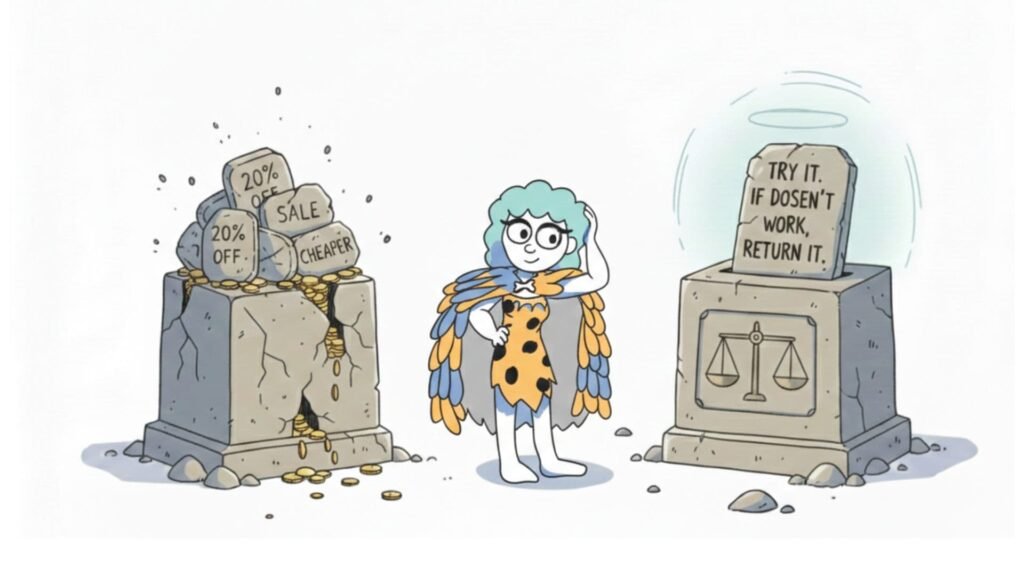
Gateholders scroll past obvious ads Instantly. Learn how to earn attention with contradiction strategies

Agenda:
- Why Contrarian Hooks Work Specifically for Analytical Buyers
- The Problem With How Most Brands Use Contrarian Hooks
- The Five Types of Contrarian Hooks and What Each Accomplishes
- How to Validate Your Contrarian Position Without Losing Credibility
- The Risk of Contrarian Hooks Backfiring
- The Copy Framework for Each Contrarian Type
- Where Contrarian Hooks Need to Be Deployed
- How to Research What to Be Contrarian About
- Handling Pushback on Your Contrarian Position
- Why This Stops the “Just Another Ad” Dismissal
- Common Industry Truths Ripe for Challenge
- The Bottom Line
Your content is logical. It’s clear. It explains mechanisms thoroughly. You’re doing everything right for analytical buyers.
But Gateholders still scroll past without stopping.
The problem isn’t quality. It’s attention. You’ve optimised for comprehension before you’ve captured their focus.
Gateholders dismiss most ads instantly with the thought “ah, just another ad trying to sell me something.” Your thoughtful, detailed content never gets read because they never stop scrolling to engage with it.
You need a pattern interrupt. Something that flags their brain: this might challenge what I believe.
That’s where contrarian hooks work. Not because Gateholders love controversy. Because their analytical minds can’t ignore contradictions without assessing whether they’ve been wrong.
Why Contrarian Hooks Work Specifically For Analytical Buyers
The brain treats contradiction as important information requiring immediate attention.
When something threatens an assumption, especially one Gateholders have relied on to make decisions, their mind locks in to assess: is this claim wrong, or have I been wrong?
They can’t scroll past. They have to evaluate.
This isn’t about being provocative for attention. It’s about triggering the analytical mind’s need to verify or refute challenges to their worldview.
For Gateholders who’ve been disappointed by solutions before, contrarian hooks offer validation: “Finally, someone who knows the conventional approach doesn’t work.”
They’ve tried the standard advice. It failed. When you challenge that same advice, you signal you understand why their past attempts didn’t succeed.
That instant creates trust. Not from agreement, but from demonstrated understanding that the common approach has problems.
The Problem With How Most Brands Use Contrarian Hooks
Most brands know one type: the simple negation.
“Stop doing X.” “X doesn’t work.” “The truth about X.”
This is contrarian messaging at its most basic. It works occasionally, but it’s overused and often lacks substance.
The problem: negation without explanation feels like clickbait. Gateholders’ BS detectors activate.
“Stop using Y” grabs attention briefly. Then they think: “Okay, why? Prove it.” If you can’t immediately back it up with mechanism and evidence, they dismiss you as just another attention-seeker.
Effective contrarian hooks aren’t just about disagreeing. They’re about challenging beliefs with logic that Gateholders can verify.
The Five Types Of Contrarian Hooks And What Each Accomplishes
Based on extensive research, here are the most impactful contrarian approaches for analytical buyers:
Type 1: The Myth-Busting Hook
This directly challenges a widely believed “fact” in your industry with evidence.
Structure: “Industry experts say X. But data shows Y. Here’s why everyone got it wrong.”
What it does: Positions you as someone who prioritises truth over industry consensus. Appeals to Gateholders’ scepticism of marketing claims.
Example: “Everyone says you need 8 hours of sleep. Sleep research actually shows optimal sleep duration varies by genetics and age. Here’s what the studies actually prove.”
Why it works: Gateholders respect evidence over consensus. They’ve been misled by “common knowledge” before. Showing you’ve done actual research builds immediate credibility.
When to deploy: Stage 2, Problem Aware. They’re trying to diagnose their issue. Myth-busting reframes their understanding of the problem itself.
Type 2: The Reversal Hook
This takes conventional advice and argues the opposite approach is actually correct.
Structure: “Conventional wisdom says do X to achieve Y. We found doing the opposite of X achieves Y better. Here’s the mechanism.”
What it does: Challenges not just beliefs but recommended behaviours. Forces re-evaluation of past decisions.
Example: “Most brands say post consistently every day. Our analysis of 500 accounts shows posting 3 times per week with higher quality outperforms daily low-effort posts by 40%.”
Why it works: Gateholders have likely followed conventional advice and been disappointed. Reversal hooks validate their suspicion that standard approaches don’t work.
When to deploy: Stage 2 and 3. Helps them understand why past solutions failed and why different approach might succeed.
Type 3: The Hidden Variable Hook
This reveals a factor that conventional approaches ignore, explaining why standard methods fail.
Structure: “Standard approach X fails because it doesn’t account for hidden variable Z. Here’s why Z matters more than anyone discusses.”
What it does: Adds complexity to oversimplified conventional wisdom. Appeals to Gateholders’ analytical nature.
Example: “Most productivity advice ignores chronotype. Morning routines fail for 40% of people because their biological peak performance is afternoon. Here’s the research.”
Why it works: Explains mechanically why one-size-fits-all advice doesn’t work. Gateholders appreciate nuance and variables others miss.
When to deploy: Stage 2, Problem Aware. Helps them understand why they haven’t succeeded with standard approaches.
Type 4: The Counter-Intuitive Truth Hook
This presents a finding that seems wrong but is actually correct, backed by evidence.
Structure: “This sounds backwards, but data proves: doing less of X actually produces more of Y. Here’s why.”
What it does: Creates cognitive dissonance that demands resolution. Gateholders must engage to determine if the claim is valid.
Example: “Adding friction to checkout actually increases conversion for high-ticket items. Requiring account creation filters impulse browsers, leaving serious buyers who convert 3x higher.”
Why it works: Counter-intuitive claims trigger verification instinct. They have to assess the evidence to accept or reject.
When to deploy: Stage 3, Solution Aware. Differentiates your approach from expected solutions.
Type 5: The Uncomfortable Truth Hook
This states a reality most brands avoid mentioning because it’s unflattering to the industry.
Structure: “Here’s what nobody in this industry wants to admit: X is true, and it means Y for consumers.”
What it does: Demonstrates honesty and willingness to challenge industry self-interest. Builds trust through transparency.
Example: “Most supplements don’t work because absorption rates are 10-15%. The industry doesn’t publicise this because it undermines sales. Here’s what actually gets absorbed.”
Why it works: Gateholders assume most brands hide unflattering truths. Volunteering uncomfortable information signals integrity.
When to deploy: Stage 3, Solution Aware. Separates you from competitors hiding the same truths.
How To Validate Your Contrarian Position Without Losing Credibility
The risk with contrarian hooks: if you can’t immediately prove your challenge, you look like you’re being different for attention.
Gateholders need proof. Fast.
The validation framework:
Lead with the contrarian claim. Don’t bury it. The hook is the attention grabber.
Follow immediately with evidence source. “Studies show,” “Data from X research,” “Analysis of Y.”
Explain the mechanism. Why does the evidence support your contrarian position? What’s the logical connection?
Acknowledge the conventional wisdom exists. “Most people believe X because…” This shows you’re not ignorant of the standard view.
Show why conventional wisdom is wrong. “But X doesn’t account for Y variable.”
Leverage social proof. Expert voices, peer influence, social movements that support your position. Don’t stand alone.
Your answers emphasised this: status does the heavy lifting. Expert voices, solid proof, third-party validation. These transform contrarian from opinion to credible challenge.
The Risk Of Contrarian Hooks Backfiring
Contrarian messaging can alienate instead of engage. Here’s when it goes wrong:
When you attack instead of educate: “Anyone who believes X is an idiot” makes people defensive. “Most people believe X, but here’s why that’s incomplete” invites reconsideration.
When you can’t prove it: Making contrarian claims without evidence destroys credibility. Gateholders will verify. If you’re wrong, you’re done.
When you’re contrarian about things that don’t matter: Challenging beliefs for shock value without serving your audience alienates them.
When you threaten their identity: Be careful challenging beliefs core to how Gateholders see themselves. You must align with their interests whilst challenging industry norms.
Your guidance was clear: they should not feel threatened by the statement. It must come across like you’re directly talking to them and are on their side.
The frame isn’t “you’re wrong.” It’s “we’ve all been misled by industry messaging that doesn’t serve us.”
The Copy Framework For Each Contrarian Type
Each type has optimal structure for maximum impact:
Myth-Busting Framework: “You’ve been told X your whole life. But recent research shows Y. Here’s what changed our understanding.”
Reversal Framework: “Conventional advice says do X. We tested this with Z subjects. Doing the opposite produced better results. Here’s why.”
Hidden Variable Framework: “Standard approach X works sometimes. But when hidden variable Y is present, X fails. Here’s how to identify if Y applies to you.”
Counter-Intuitive Framework: “This sounds backwards: less X produces more Y. But here’s the mechanism that explains why.”
Uncomfortable Truth Framework: “Nobody in this industry admits X. But consumers deserve to know because it affects your decisions. Here’s what we found.”
All frameworks share common elements:
- State the contrarian position clearly
- Provide evidence source immediately
- Explain mechanism logically
- Show practical application
Where Contrarian Hooks Need To Be Deployed
Not every piece of content needs contrarian hooks. Strategic placement maximises impact.
Ads: Primary use case. You have seconds to stop scrollers. Contrarian claims are pattern interrupts that force engagement.
Social media posts: Especially for building expert credibility. Regular myth-busting or industry truth content establishes you as someone who challenges rather than follows.
Email subject lines: Contrarian claims increase open rates because recipients want to assess the challenge.
Landing page headlines: If visitors arrived from contrarian ad, continue the theme. Don’t bait-and-switch.
Your specification: ads and social media accounts. These are the attention battlegrounds where contrarian hooks matter most.
Product pages can use softer contrarian elements but don’t need aggressive hooks. By that stage, you’ve captured attention. Now deliver mechanism.
How To Research What To Be Contrarian About
You can’t just guess what beliefs to challenge. You need systematic identification.
The research process:
Monitor customer questions: What do they assume about your industry? What “common knowledge” do they cite when explaining their problem?
Review competitor messaging: What claims does everyone make? What advice does everyone give? These are ripe for challenge if evidence contradicts them.
Study industry “best practices”: Identify which practices are repeated without evidence. Challenge practices that persist despite weak results.
Analyse your own past failures: What conventional advice did you follow that didn’t work? Your experience validates challenging it.
Read research studies: Academic research often contradicts industry marketing. Find gaps between what studies show and what brands claim.
Survey your customers: Ask what advice they followed that failed. Their frustrated experiences reveal beliefs worth challenging.
The goal: find disconnect between what people believe and what evidence shows.
Handling Pushback On Your Contrarian Position
Gateholders are sceptical. What if they’re sceptical of your contrarian claim too?
This is actually good. Their scepticism means they’re engaging, not dismissing.
The approach:
Welcome disagreement. “You’re right to be sceptical. Here’s why this claim seems wrong at first.”
Provide deeper evidence. Link to studies, show data, cite experts who support your position.
Acknowledge nuance. “This doesn’t apply in all cases. When X condition exists, conventional approach works. But when Y condition exists, which is Z% of cases, our approach works better.”
Invite verification. “Don’t take our word. Here’s how to test this yourself.”
Your guidance emphasised being careful to align with Gateholders’ beliefs and interests. Don’t position yourself against them. Position yourself and them against misleading industry consensus.
Frame: “We’re both trying to find truth in an industry full of marketing hype. Here’s what the evidence actually shows.”
Why This Stops The “Ah Just Another Ad” Dismissal
Gateholders scroll past most content because they’ve pattern-matched it as marketing immediately.
Contrarian hooks break that pattern because they don’t sound like ads.
Ads say: “Revolutionary solution! Transform your life!”
Contrarian hooks say: “That revolutionary solution? Doesn’t work. Here’s why.”
The second doesn’t sound like selling. It sounds like education or investigation.
Your insight: it’s an effective way to grab attention instantly. They feel obligated to give you time to explain yourself because it’s an unpopular opinion. They want to disagree but they see the proof, and instantly this builds trust.
This is the psychological mechanism: contrarian claims trigger verification instinct before dismissal instinct.
They can’t dismiss without assessing. Once they’re assessing, they’re reading. Once they’re reading, you can demonstrate mechanism and build credibility.
The hook bought you time. Now you have to deliver substance.
Common Industry Truths Ripe For Challenge
While specific to your industry, patterns emerge across sectors:
“More is better” assumptions: More features, more content, more options. Often less is more effective.
“New is better” assumptions: Latest technology, newest approach. Often proven methods outperform trends.
“Fast results” claims: When patience actually produces better outcomes than speed.
“Works for everyone” universality: When personalisation or specificity matters more than one-size-fits-all.
“Complexity equals quality” beliefs: When simpler approaches work better despite seeming less sophisticated.
These represent thinking patterns, not specific claims. Identify which pattern appears in your industry, then challenge with evidence.
The Bottom Line
Gateholders scroll past most content because it pattern-matches as another ad trying to sell them something.
Contrarian hooks break that pattern by challenging beliefs instead of affirming them.
The analytical mind can’t ignore contradiction without assessment. They have to stop and evaluate whether your challenge is valid or whether they’ve been operating on false assumptions.
This buys you time. Seconds where they’re reading instead of scrolling.
But contrarian hooks without substance are clickbait that destroys credibility. You must immediately back claims with evidence, explain mechanism, and demonstrate you’re not being different for attention but challenging beliefs because evidence demands it.
The five types give you range: myth-busting for Stage 2 problem awareness, reversal and hidden variable for reframing solutions, counter-intuitive truths for differentiation, uncomfortable truths for trust-building.
Deploy in ads and social content where attention is the bottleneck. Lead with the contrarian claim, follow with proof, explain mechanism, align with their interests against industry consensus.
When Gateholders encounter thoughtful contrarian positions backed by evidence, they recognise expertise. Not just someone who knows industry talking points, but someone who’s analysed them critically and found them wanting.
That’s when “ah just another ad” becomes “finally, someone who actually understands.”
The scroll stops. The attention converts to engagement. The engagement leads to mechanism explanation. The mechanism builds trust.
Contrarian hooks don’t replace substance. They create the opening for substance to be consumed instead of scrolled past.
Get the hook right. Then deliver the logic they came to evaluate.