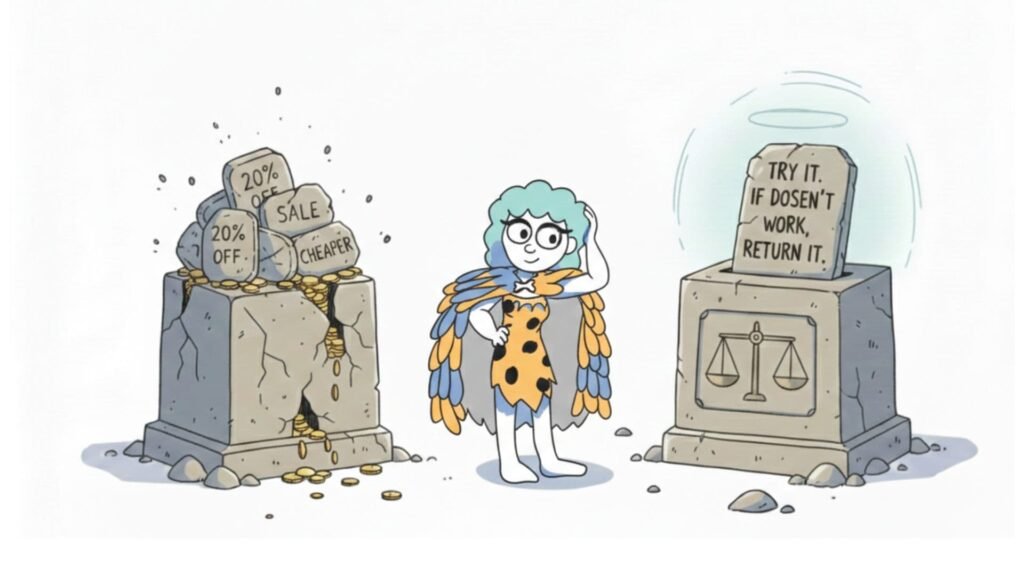
Stop rinsing the same hooks style. Learn the 7 pattern interrupt types that actually stop the scroll and beat ad fatigue.

Agenda:
- The Pattern Interrupt Playbook
- What Pattern Interrupt Actually Does
- Visual Shock
- Audio Disruption
- Colour and Filter Shift
- Format Break
- Motion and Movement
- Cognitive Dissonance
- Social Camouflage
- Why Most Brands Only Use Two
- When Pattern Interrupt Backfires
- Reading Your Data
- The Rotation Strategy
- The Bottom Line
You know the feeling. You launch an ad. The creative looks good. The offer is strong. But your thumbstop rate is sitting at 8% and your CTR is basically flatlined.
People are scrolling right past.
The algorithm sees this and quietly buries your ad. Your cost per impression climbs. Your ROAS tanks. And you’re left wondering what went wrong.
Here’s the uncomfortable truth: your hook isn’t doing its job. And if you’re like most brands, you’re only using one or two types of pattern interrupt when there are actually seven distinct sub-types you could be deploying.
Most brands default to the obvious visual tricks. A flash. A fast cut. Maybe a zoom. These work sometimes. But they’ve been so overused that audiences have developed immunity. Their brains register the pattern and keep scrolling anyway.
This playbook breaks down all seven sub-types so you can rotate through them strategically and keep your audience guessing.
What Pattern Interrupt Actually Does
Before we get into the sub-types, let’s be clear about what we’re trying to achieve.
Pattern interrupt is a technique borrowed from neurolinguistic programming. It works by disrupting the automatic behaviour your audience has developed from endless scrolling. Their thumb is moving on autopilot. Their brain is filtering out anything that looks familiar.
When something unexpected appears, their reticular activating system fires. This is the part of the brain that notices change. Thousands of years ago, it helped our ancestors spot predators. Today, it helps marketers capture attention.
Facebook’s own data shows that videos with effective pattern interrupts in the first three seconds see engagement rates up to three times higher than those without. TikTok’s internal research shows that pattern-based attention hooks increase completion rates by 41%.
The first three seconds are everything. Research shows that the average user spends just 1.7 seconds viewing content on mobile before deciding to scroll or stop. You have a fraction of a moment to make their brain say “wait, what is that?”
A strong pattern interrupt doesn’t just grab attention. It signals to the algorithm that your content is engaging, which earns you more reach and cheaper impressions. When brands nail the opening, they see approximately 60% higher total retention and noticeable algorithmic lift.
Now let’s break down the seven ways to make it happen.
Sub-type 1: Visual Shock
This is the one most brands know. A sudden, unexpected visual change that creates immediate contrast with the scroll environment.
Visual shock works because it jolts the viewer out of autopilot. Something looks different from everything else in their feed. Their brain flags it as novel and worth investigating.
What this looks like in practice:
High-contrast colours that pop against the typical feed. Close-up shots that feel uncomfortably intimate. Unexpected imagery that makes viewers do a double-take. Water being thrown at a product. Something breaking, falling, or moving in a way that defies expectations.
One brand threw water at a backpack in the first frame of their ad. The splash disrupted the calm of the feed and people kept watching to see what happened next.
Why most brands fail with this:
They confuse visual shock with visual chaos. Explosions and fireworks might get attention, but if they don’t relate to what you’re selling, the viewer has no reason to keep watching. The shock becomes empty calories.
A pattern interrupt that works needs to do two things: grab attention AND frame the product or problem you’re about to address. Visual shock without context is just noise.
When to use it:
When you need maximum disruption and you have a clear visual hook that connects to your product. Product demonstrations, unboxings, and transformation reveals work particularly well here.
Sub-type 2: Audio Disruption
This is one of the most underrated pattern interrupts. While most brands obsess over visuals, audio can stop a scroll just as effectively.
Sound works on a different sensory channel. Even when viewers are scrolling with their thumb, a sudden audio change can trigger the brain’s alert system.
What this looks like in practice:
A sudden silence after background music. A record scratch at a key moment. Unexpected sound effects that punctuate a statement. A dramatic bass drop. Music that suddenly shifts tempo or genre. Even ASMR-style sounds that feel oddly satisfying.
Think about the Intel four-note sound or the Netflix “ta-dum.” These audio signatures are so distinctive they immediately grab attention.
Why most brands fail with this:
They treat audio as background rather than a strategic tool. The music plays continuously with no variation. There’s no moment of tension or release. Nothing unexpected happens sonically.
Remember that many viewers watch with sound off, so audio disruption works best when paired with a visual element. But for those watching with sound, a well-timed audio interrupt can be incredibly powerful.
When to use it:
When you want to emphasise a specific moment or transition. Audio disruption is particularly effective for building tension before a reveal, or for punctuating a bold claim.
Sub-type 3: Colour and Filter Shift
This is one you’ve likely seen but probably haven’t consciously thought about. Shifting the colour grading or applying a filter creates an instant visual reset.
The brain notices when something changes from one state to another. A sudden shift in colour temperature or saturation signals that something new is happening.
What this looks like in practice:
Starting in black and white, then snapping to full colour at the moment of transformation. Applying a vintage or VHS filter for a flashback, then returning to crisp modern footage. Briefly desaturating everything except your product to create focus. Using a dramatic colour grade shift to signal a mood change.
Why most brands fail with this:
They apply filters consistently throughout the entire video. Everything looks the same from start to finish. The filter becomes invisible because there’s no contrast.
The power of a colour shift comes from the transition itself. The viewer needs to see the change happen. Without the shift, you’re just making your video look slightly different from the norm.
When to use it:
When you’re showing a before and after. When you want to signal a time shift or flashback. When you want to draw attention to a specific element by making everything else fade into the background.
Sub-type 4: Format Break
This is when the structure or format of the video itself suddenly changes. The viewer was expecting one thing and they got something completely different.
Format breaks work because they violate the unwritten rules of how content is supposed to look. They make the viewer recalibrate their expectations.
What this looks like in practice:
Switching camera angles mid-sentence. Going from a polished studio shot to raw iPhone footage. Breaking the fourth wall by addressing the viewer directly. Changing from vertical to horizontal or using split-screen. Showing a “behind the scenes” moment that feels unscripted.
Old Spice mastered this with their “The Man Your Man Could Smell Like” campaign. The spokesperson seamlessly transitioned from a bathroom to a boat to a horse, all while maintaining direct camera address. The format kept shifting while the delivery stayed constant. It felt impossible and viewers couldn’t look away.
Why most brands fail with this:
They think polished equals professional. Every frame is consistent. Every transition is smooth. There’s no moment where the format itself becomes surprising.
Format breaks work precisely because they feel slightly wrong. That friction is what captures attention.
When to use it:
When you want to signal authenticity or break away from what feels like “advertising.” When you’re comparing two states or showing different perspectives on the same thing. When you want to create a sense of unpredictability.
Sub-type 5: Motion and Movement
This goes beyond basic video editing. It’s about manipulating the actual physics of what’s happening on screen in unexpected ways.
Motion triggers the brain’s attention system because movement in our peripheral vision has always been important for survival. Unexpected motion is even more attention-grabbing.
What this looks like in practice:
A sudden zoom punch that moves towards the viewer. Flipping the screen orientation mid-video. Slow motion at an unexpected moment to create drama. Speed ramping that compresses time then releases it. Objects or text flying into frame from off-screen. Reversing footage to show something reassembling.
Why most brands fail with this:
They use motion effects because they look cool, not because they serve a purpose. Zooms happen randomly. Speed changes feel arbitrary. The movement doesn’t emphasise anything specific.
Motion interrupts work best when they punctuate a key moment. The motion should be telling the viewer “pay attention to this.”
When to use it:
When you want to emphasise a specific statement or reveal. When you’re demonstrating something that benefits from altered time perception. When you want to create energy and momentum that matches your product’s positioning.
Sub-type 6: Cognitive Dissonance
This is about breaking mental patterns, not just visual ones. You say or show something that conflicts with what the viewer expects, forcing their brain to engage.
Cognitive dissonance creates a gap between expectation and reality. That gap demands resolution. The viewer keeps watching to figure out what’s going on.
What this looks like in practice:
Opening with a contrarian statement that challenges common beliefs. Showing unexpected information or statistics that defy assumptions. Using provocative questions that force the viewer to mentally respond. Creating situations where something feels “off” in a way that demands explanation.
“Stop wasting money on marketing” as an opening line from a marketing agency creates cognitive dissonance. The viewer needs to know why a marketing agency would say that.
Why most brands fail with this:
They play it safe. They stick to claims their audience already believes. They’re afraid of saying something that might polarise or challenge.
The power of cognitive dissonance comes from the friction. If everyone agrees with your opening statement, there’s no tension. No reason to keep watching.
When to use it:
When you want to position yourself against the status quo. When you have a genuinely different perspective or approach. When you want to attract a specific audience by filtering out people who won’t resonate.
Sub-type 7: Social Camouflage
This is the newest and possibly most effective pattern interrupt for impulse buyers. It’s about making your ad look like native content rather than advertising.
Social camouflage works because it bypasses the “ad filter” that viewers have developed. If it looks like something a friend posted, the brain processes it differently than if it looks like a brand message.
What this looks like in practice:
Using a fake text message notification pop-up as your opening visual. Creating content that mimics the TikTok response bubble format. Making your ad look like a casual mirror selfie rather than a produced piece. Using the incoming call screen format to create instant personal connection. Green screen formats that feel like someone recorded it on their phone.
Why most brands fail with this:
They make it look too polished. The production quality screams “this is an ad” even when the format is trying to blend in. There’s a disconnect between the casual format and the professional execution.
Social camouflage only works when it genuinely feels native. The moment it looks produced, the spell breaks.
When to use it:
When you want to maximise the feeling of authenticity. When you’re targeting audiences that are highly ad-resistant. When the platform rewards content that feels organic over content that feels promotional.
Why Most Brands Only Use Two
If there are seven sub-types, why do most brands only deploy one or two?
The answer is simple: visual shock and basic motion are the most obvious. They’re what you think of when someone says “grab attention.” Flash. Zoom. Cut.
But obvious is the enemy of effective. When everyone uses the same techniques, those techniques stop working. Viewers develop immunity. The pattern becomes the new baseline.
The brands that consistently stop the scroll are the ones rotating through multiple sub-types. They use audio disruption one week, social camouflage the next, cognitive dissonance after that. The audience never knows what to expect.
This is especially critical for impulse buyers. These are people scrolling on autopilot, hunting for dopamine, making decisions in three seconds or less. They’ve seen every obvious trick. If you want to reach them, you need range.
When Pattern Interrupt Backfires
Before you go wild with these techniques, a warning.
Pattern interrupts can be overused. Novelty loses its charm when it becomes predictable. If every video has the same type of surprise, it stops being surprising.
The research is clear: using too many pattern interrupts in a single video creates the opposite effect. Viewers get distracted and lose interest completely. One well-placed interrupt is more effective than a video that feels like a circus.
The interrupt also needs to connect to your message. A shocking visual that has nothing to do with your product might grab attention for a moment, but it won’t convert. The viewer was expecting one thing and got something disconnected. That’s confusion, not curiosity.
The goal is to disrupt the scroll AND frame your product as the answer. Both pieces need to work together. An interrupt without context is just noise. Context without an interrupt is just another ad that gets scrolled past.
Reading Your Data
How do you know if your pattern interrupts are working?
Your thumbstop rate tells the story. This is 3-second video views divided by impressions. It measures what percentage of people stopped scrolling when they saw your ad.
Industry benchmarks suggest that anything below 25% indicates a problem with your hook. Your opening isn’t disrupting the scroll effectively.
Between 25% and 35% is decent but has room for improvement. This is where most brands land when they’re using basic pattern interrupts.
Above 35% means your creative is genuinely stopping thumbs. Above 40% means you’ve found something that really works for your audience.
If your thumbstop is high but your hold rate is low, your interrupt is grabbing attention but then losing it. This usually means the transition from hook to body is weak. The viewer stopped for the surprise but didn’t find a reason to stay.
If your thumbstop is low despite using pattern interrupts, you’re probably using techniques that have become too familiar. Time to rotate to a different sub-type.
The Rotation Strategy
Here’s how to put all of this into practice.
Start by auditing your current creative. Which sub-types are you already using? Most brands will find they’re stuck on visual shock and motion. That’s your baseline.
Next, pick one sub-type you haven’t tested. Build three variations of your hook using that technique. Run them against your current best performer.
Watch your thumbstop rate closely for the first 24 hours. The algorithm will tell you quickly whether the new approach is working.
When you find a technique that lifts your thumbstop, use it until it fatigues. You’ll see the numbers start to decline as your audience builds immunity. That’s your signal to rotate to the next sub-type.
The brands that win long-term are the ones that never let their audience get comfortable. They keep rotating. They keep testing. They never rely on a single trick for too long.
The Bottom Line
Pattern interrupt isn’t just one technique. It’s a category with seven distinct sub-types, each with different strengths and applications.
Most brands get stuck on visual shock and basic motion because those are the obvious choices. But obvious doesn’t work when everyone is doing it.
The sub-types most brands ignore are often the most effective: audio disruption, colour shifts, social camouflage, and cognitive dissonance. These feel fresher because fewer people use them.
Your thumbstop rate is the metric that tells you whether your interrupts are working. If it’s below 25%, your hooks need work. Above 35%, you’ve found something effective.
The goal isn’t to use all seven sub-types in every video. It’s to rotate through them strategically so your audience never knows what to expect. Novelty is a resource that depletes. Keep refilling it by switching approaches before they fatigue.
Stop relying on the same two tricks. Start building range.