Blazewalkers click fast but buy faster. Learn how to align tactics to turn clicks into sales.
Agenda:
- The Stage Mismatch Problem Nobody Talks About
- Why Blazewalkers Click but Don’t Buy
- The Diagnostic Sequence: Finding Your Leak
- Stage 1 Tactics vs. Stage 4 Tactics: The Critical Difference
- The Curiosity Hook Trap
- What the Gurus Get Wrong About “Proven” Tactics
- The Fix: Aligning Your Funnel to the Blazewalker Brain
- The Metrics That Reveal Stage Mismatch
- The Bottom Line
You’ve seen the numbers. The clicks are rolling in. Your thumbstop rate looks healthy. People are engaging with your creative.
And yet… your ROAS is tanking.
The ads are working. The conversions aren’t.
If you’re selling to Blazewalkers, the fastest brain in commerce, this disconnect is more common than you think. And it’s almost never about your product, your price, or your audience.
It’s about sequencing.
You’re using the wrong tactics at the wrong stage. And that mismatch is silently bleeding your budget dry.
The Stage Mismatch Problem Nobody Talks About
Here’s what most brands get wrong about consumer psychology:
They learn a handful of “proven” tactics (curiosity hooks, pattern interrupts, anchoring, scarcity) and deploy them everywhere, all the time, to everyone.
The gurus taught them the ingredients. Nobody gave them the recipe.
But here’s the truth: a tactic that works brilliantly at Stage 1 can completely destroy your conversion rate at Stage 4.
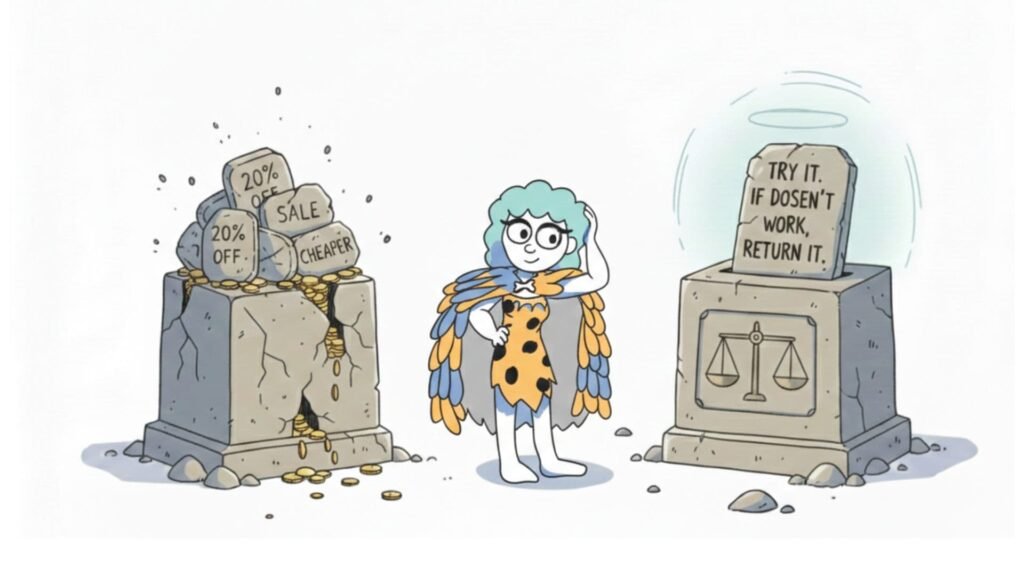
Think about it this way. Curiosity hooks are designed to stop the scroll and spark interest. They work by creating an open loop, an unanswered question that compels someone to click.
Perfect for someone who doesn’t know you exist.
Catastrophic for someone who’s already clicked, already interested, and already standing at the checkout with their card in hand.
At Stage 4, that Blazewalker doesn’t need more curiosity. They need certainty. They need a reason to act now. They need the loop closed, not opened wider.
When you hit them with “Wait until you see what happens next…” at the moment they’re ready to buy, you’re not building intrigue.
You’re creating doubt.
Why Blazewalkers Click But Don’t Buy
Let’s be specific about what’s happening inside the Blazewalker brain.
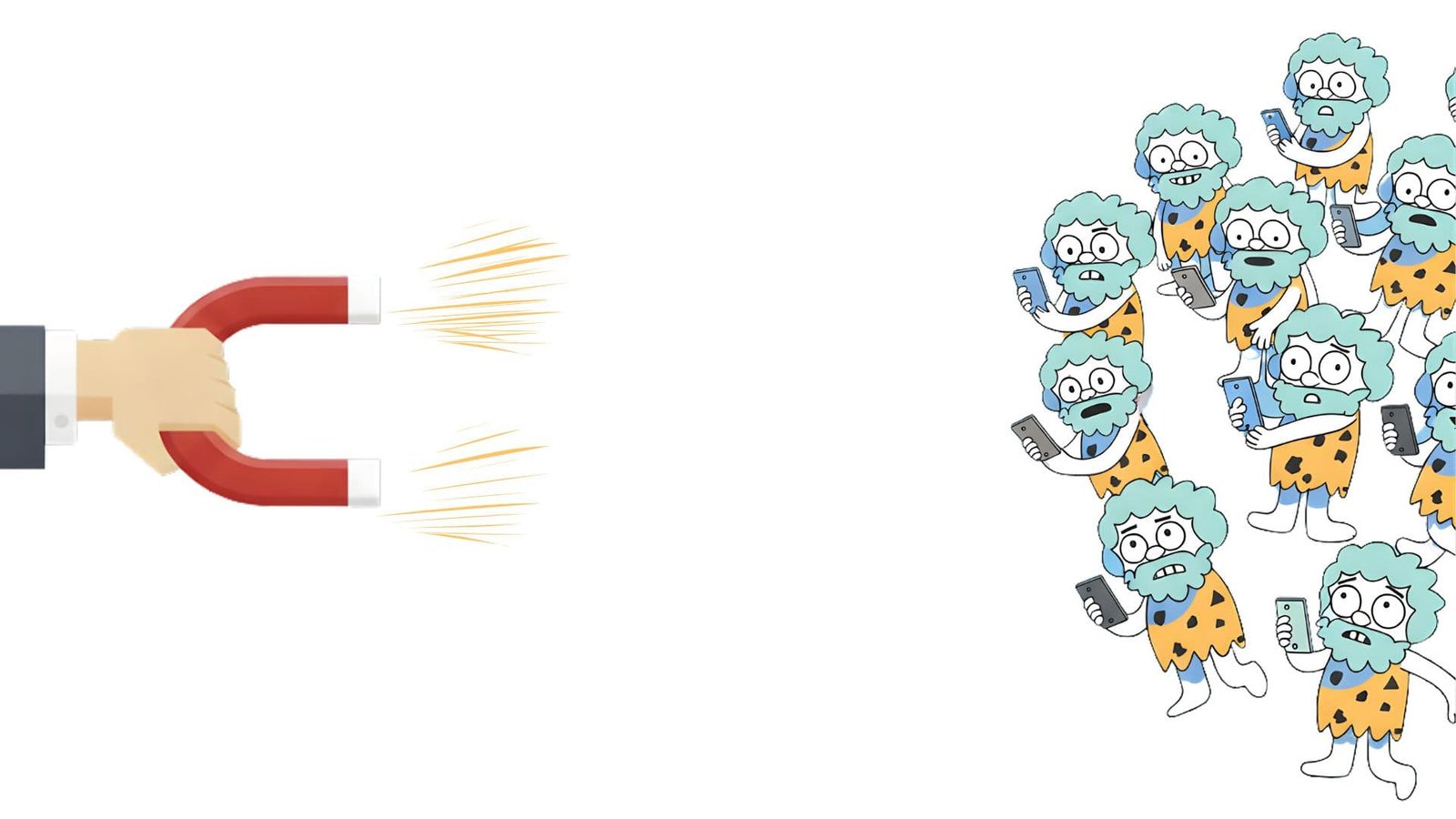
These buyers aren’t on a shopping mission. They’re dopamine hunting. They find you while scrolling on public transport, lying in bed, waiting for coffee, or procrastinating at work.
They decide at thumb speed. One second of friction and the impulse evaporates.
Which means when they click your ad, you’ve done something right. You’ve interrupted their scroll. You’ve sparked desire. You’ve earned three seconds of their attention.
But then what?
If your landing page hits them with more curiosity hooks (“Discover the secret…”), more pattern interrupts, more “wait there’s more” energy, you’re doing the psychological equivalent of asking someone on a third date when they’ve already said yes to marrying you.
The impulse you worked so hard to create? You just suffocated it with information.
Here’s what the research shows about impulse buyers:
- They perceive the risk of taking action as low
- They perceive the value of taking action as high
- They perceive the cost of shopping around as high
- FOMO drives their behaviour
- Familiarity makes the purchase decision easy
Notice what’s not on that list? “They want to be educated.” “They need more information.” “They’re looking for comprehensive product details.”
Blazewalkers who click but don’t buy are experiencing one of three things:
- Friction killed the impulse. The page loaded too slowly. The checkout had too many steps. They had to think.
- Fear replaced desire. Something triggered their “is this legit?” alarm. No social proof. No trust signals. Too many promises without evidence.
- The message didn’t match the moment. You grabbed their attention with excitement and then tried to educate them. The energy collapsed.
The Diagnostic Sequence: Finding Your Leak
When you’re seeing high CTR but low ROAS, here’s the order to diagnose the problem:
First: Check the basics.
Is the landing page URL in your ad actually working? Does it load? Is it the correct page for the ad? (You’d be surprised how many brands are advertising flowers and sending traffic to a page about dehumidifiers.)
Second: Check the promise match.
Does your landing page immediately show what you promised in the ad? If your ad featured a red dress, does the red dress appear above the fold on the landing page? Or did you send them to a generic homepage and expect them to search for it?
Third: Check page speed.
Google found that every additional second of load time drops conversion by 12%. For Blazewalkers, whose attention span is measured in milliseconds, that number is probably higher. If your page takes more than three seconds to load, you’re losing them before they see anything.
Fourth: Check your page components.
Strong hero that matches the ad creative? Clear, single call to action above the fold? Fast, easy checkout process? Visible trust signals (reviews, security badges, guarantees)?
Fifth: Check your stage alignment.
This is where most brands fail. They’ve optimised everything above, but they’re still using Stage 1 messaging at Stage 4.
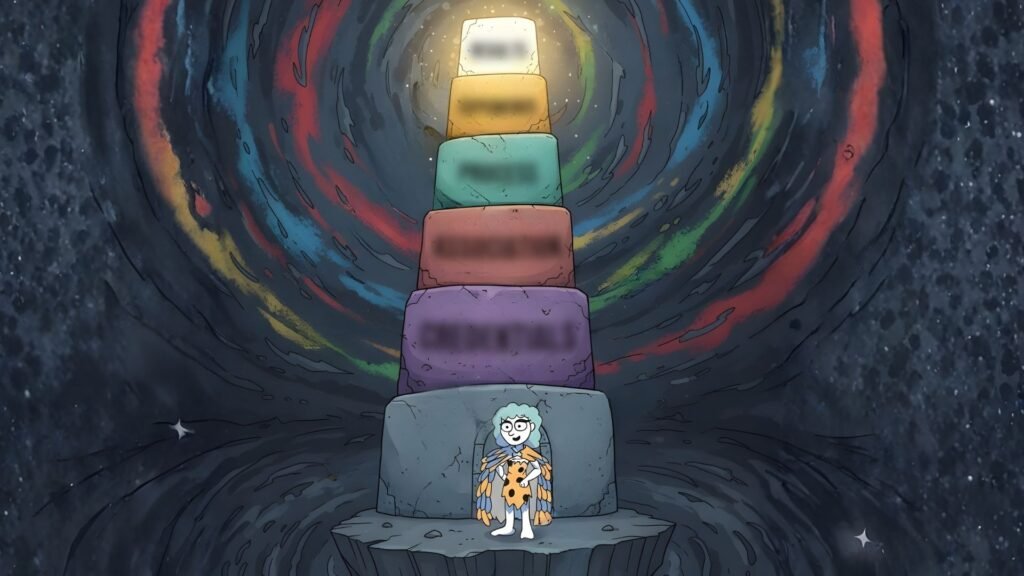
Stage 1 Tactics vs. Stage 4 Tactics: The Critical Difference
Let’s get concrete about what belongs where.
Stage 1 (Unaware): The Dormant State
The barrier: Numb scrolling, no intention, no desire, boredom.
The motivator: Anything that feels new, alive, or rewarding in the next second.
What works here:
- Pattern interrupts (visual disruption)
- Curiosity hooks (“Wait… what is that?”)
- Priming (preparing them to receive information)
- Soft power (vibe, culture, visual magnetism)
- Trend/social movement content
- Emotional triggers
The job at Stage 1: Stop the scroll. Create awareness. Spark initial interest.
Stage 4 (Product Aware): The Skeptical State
The barrier: “Is this legit?” Fear of being scammed or disappointed.
The motivator: Quick wins, instant gratification, visible payoff.
What works here:
- Anchoring (set a reference point that makes your offer feel rational)
- Contrast effect (show the “lesser path” so your offer becomes obvious)
- Social proof (visible demand, real customer evidence)
- Demonstration (visually proving the claim)
- Benefit/aspiration (“Imagine your life after…”)
The job at Stage 4: Remove doubt. Make the decision feel safe. Show the payoff.
Stage 5 (Most Aware): The Decisive State
The barrier: “I’ll do it tomorrow.” (They won’t.)
The motivator: FOMO, value, and the feeling of “I won by acting now.”
What works here:
- Scarcity/urgency (time, stock, or opportunity is limited)
- Incentivisation (reward immediate action meaningfully)
- Value propositions (“Get X for the price of Y”)
- Risk reversal (guarantees that remove the downside)
The job at Stage 5: Create movement. Make “now” feel better than “later.”
The Curiosity Hook Trap
Let me explain why curiosity hooks specifically fail at Stage 4, because this is the mistake I see most often.
Curiosity works by creating cognitive tension. You present an incomplete picture, and the brain wants to complete it. “The one thing experts don’t want you to know about…” or “What happens when you…” or “You won’t believe…”
At Stage 1, this tension is productive. It pulls someone from unawareness into awareness. It earns the click.
But at Stage 4, the customer has already clicked. They already want the product. The tension has already been created and partially resolved.
When you hit them with more curiosity at this stage, you’re essentially saying: “Hold on, there’s more you don’t know yet.”
For a Blazewalker, that translates to: “This might not be as simple as I thought.”
And the impulse dies.
The research on funnel psychology is clear: different stages require different emotional triggers. Awareness stage copy should use curiosity or frustration. Decision stage copy should leverage urgency and social validation.
Using one where the other belongs doesn’t just underperform. It actively damages your conversion rate.
What The Gurus Get Wrong About “Proven” Tactics
Here’s something that might sting a bit.
Every guru tactic you’ve learned, anchoring, social proof, scarcity, FOMO, they all work.
Just not everywhere.
Anchoring, for example, is incredibly powerful. When you show a higher price first, subsequent prices feel more reasonable. The famous Williams-Sonoma case study showed that adding a more expensive bread maker to the product line increased sales of the original model significantly.
But anchoring only works when someone is comparing options. When they’re evaluating. When they’re in consideration mode.
If you throw an anchor at someone who doesn’t even know they have a problem yet, you’re not creating a reference point. You’re creating confusion.
“Was £199, now £99” means nothing to someone who doesn’t yet believe they need what you’re selling.
The brands that scale profitably understand this: it’s not about knowing which tactics work. It’s about knowing when to deploy them.
And that “when” is determined by where your customer is in their psychological journey.
The Fix: Aligning Your Funnel to the Blazewalker Brain
If you’re experiencing high CTR but low ROAS, here’s the fix sequence:
1. Fix your offer first.
Before you touch your ads or landing page, make sure your offer makes sense for an impulse purchase. Is the price point low enough for a snap decision? Is the value immediately obvious? Is there a reason to buy now rather than later?
2. Fix your landing page second.
Match the energy and visual of your ad. Show the product immediately. Make the CTA unmissable. Reduce form fields to the absolute minimum. Add trust signals (reviews, security badges, money-back guarantee) where they’re visible without scrolling.
3. Fix your ad creative third.
Make sure your Stage 1 ads are doing Stage 1 jobs (attention, interest) and your retargeting ads are doing Stage 4-5 jobs (desire, action). Don’t use the same creative for prospecting and retargeting.
4. Fix your targeting last.
Most targeting problems come from giving the algorithm too much freedom without enough context. Use custom audiences for retargeting. Use lookalikes for prospecting. Don’t mix them.
The Metrics That Reveal Stage Mismatch
Unlock the expansion pack and learn exactly where you’re waisting money. This pairs with your free unfair advantage map for archetype specific reporting
The Bottom Line
High CTR means you’ve won the attention war. Congratulations. That’s not easy.
But attention without conversion is just expensive awareness.
The fix isn’t more testing, more creative variations, or more budget. The fix is understanding that every stage of the customer journey requires different psychological levers.
Stop using curiosity when you need certainty. Stop educating when you need to close. Stop opening loops when you need to close them.
Your Blazewalkers are ready to buy. Stop confusing them with tactics that belong at the top of the funnel.
Match the message to the moment. And watch your ROAS recover.