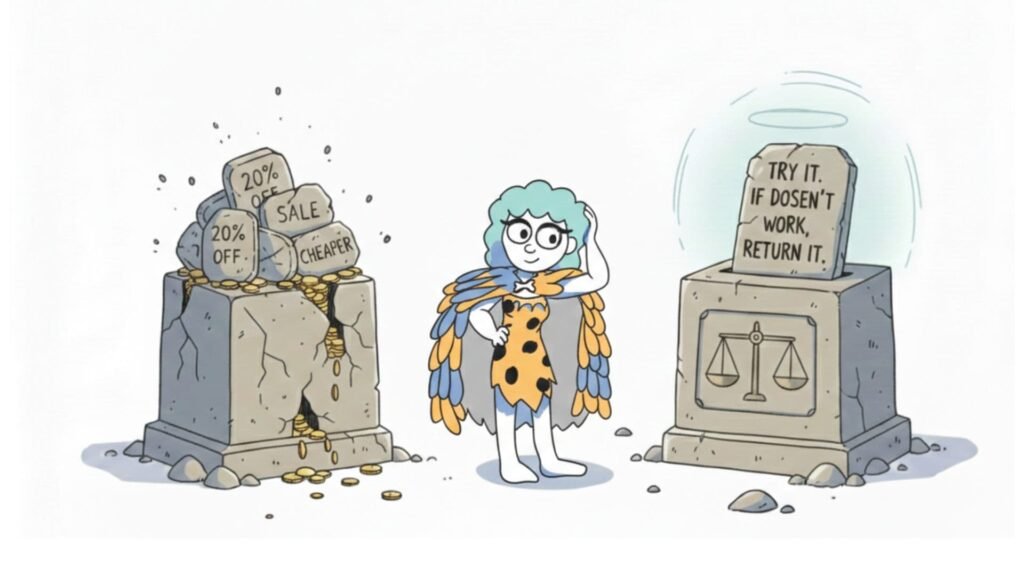
Gateholders don’t want to be inspired. They want to understand why it works. Learn how mechanism-based messaging drives conversion.
Agenda:
- Understanding the Mechanism vs Motivation Divide
- What’s Actually Happening When They Leave
- The Stages Where Mechanism Becomes Critical
- How to Explain Mechanisms Without Overwhelming
- The Seven Ways to Reveal Mechanisms Effectively
- The Language Patterns That Signal Mechanism
- Avoiding the Textbook Trap
- Where Mechanism Explanations Need to Live
- Handling Proprietary Mechanisms
- The Role of Visuals in Mechanism Explanation
- Why Mechanism Builds Trust With Sceptical Buyers
- How Mechanism Addresses Past Failures Specifically
- The Conversion Impact When You Get This Right
- The Bottom Line
Your product descriptions are detailed. Your landing pages explain features thoroughly. You’re being logical and clear.
But your Gateholders still aren’t buying. They’re reading everything, scrolling through specifications, then leaving without converting.
The problem isn’t lack of information. It’s the wrong type of information.
You’re explaining what your product does. Gateholders need to understand why it works when others didn’t.
You’re listing features and specs. They need the mechanism that makes those specs matter.
You’re trying to convince with benefits. They need logic that lets them convince themselves.
Understanding The Mechanism vs Motivation Divide
Most marketing operates on motivation. Paint the dream outcome. Show the transformation. Inspire them to imagine their ideal future.
“Transform your life.” “Unlock your potential.” “Experience the difference.”
This language works for buyers who make decisions emotionally then justify logically.
It actively repels Gateholders.
Why? Because they’ve heard these promises before. They’ve bought solutions that claimed to transform, unlock, and revolutionise. Those solutions failed.
Now they’re sceptical. Hype triggers their BS detector immediately.
They don’t need inspiration. They need explanation.
Motivation asks: How will this make me feel? Mechanism asks: Why does this work when others didn’t?
Motivation sells: The dream outcome. Mechanism sells: The logical path to that outcome.
For Gateholders, understanding the mechanism is what builds trust. Not testimonials. Not guarantees. Not emotional appeals. Clarity about how and why.
What’s Actually Happening When They Leave
Gateholders land on your product page. They start reading.
Then their internal monologue begins:
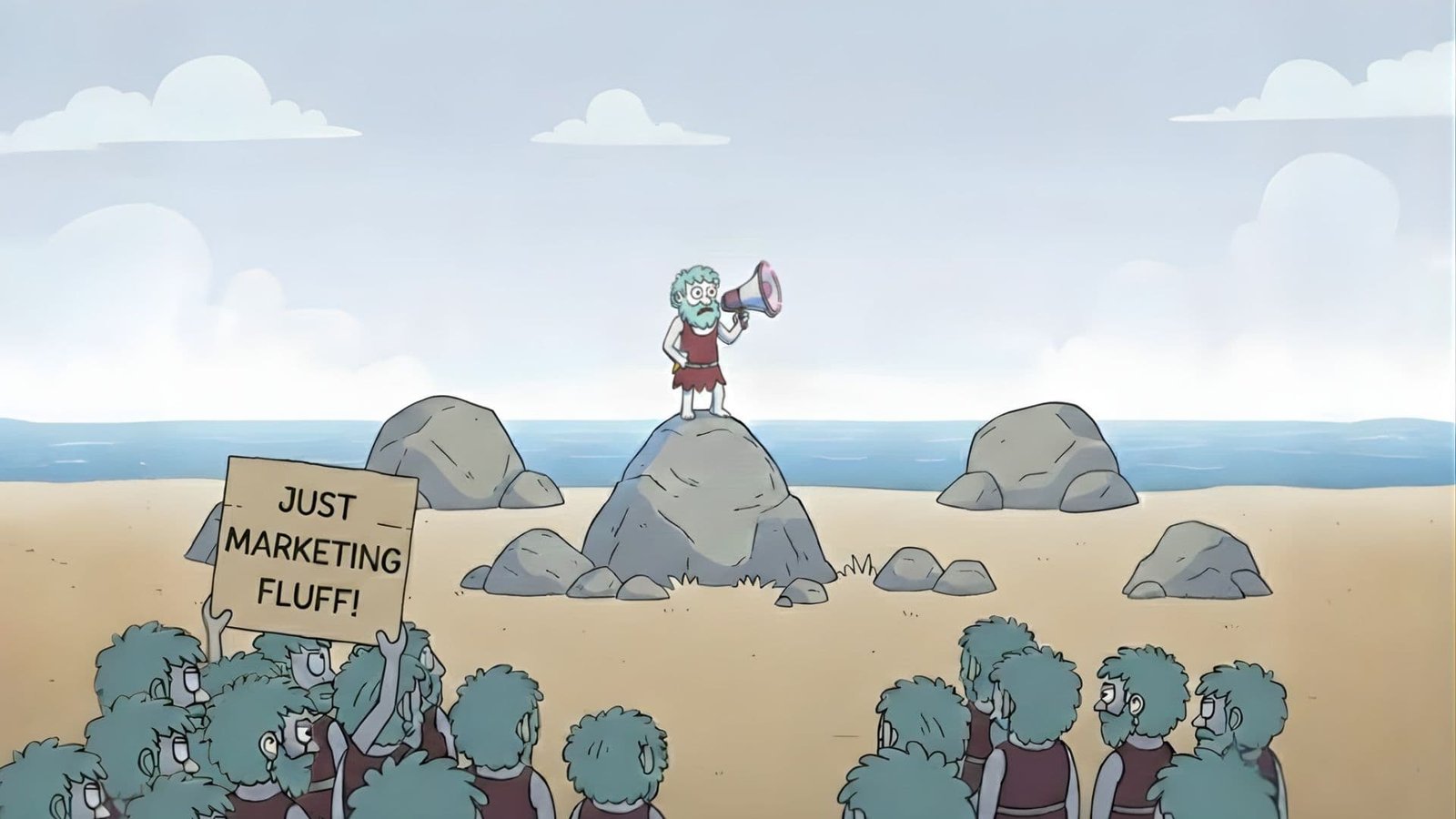
“Here we go. Another ad trying to sell me something.”
“Claims it’s revolutionary. They all say that.”
“Where’s the actual explanation of how this works?”
“This is just marketing fluff. Nothing specific.”
“Probably another thing that won’t solve the real problem.”
They scroll looking for substance. For mechanism. For the “why” behind your “what.”
If they don’t find it, they leave. Not because they’re not interested. Because you didn’t give them the logic they need to overcome past disappointments.
The diagnostic signals are clear: high bounce rate, low scroll depth, low engagement on ads, no product searches after initial visit, zero referrals from fellow Gateholders.
They came. They evaluated. They found motivation instead of mechanism. They left.
The Stages Where Mechanism Becomes Critical
Mechanism explanation isn’t just for product pages. It’s needed at multiple journey stages.
Stage 2: Problem Aware
They know something’s wrong but can’t name it. This is where framing and reframing happen.
What doesn’t work: “Are you struggling with X? You’re not alone!”
What works: “X fails because of Y mechanism. Here’s why the common solution doesn’t address Y.”
You’re not agitating pain. You’re diagnosing root cause. Showing you understand the mechanism of their problem, not just the symptoms.
Stage 3: Solution Aware
They’re evaluating different approaches. Everyone claims to work.
What doesn’t work: “Our solution is the best! Revolutionary! Game-changing!”
What works: “Most solutions use A approach, which fails when B condition exists. We use C mechanism specifically designed for B condition. Here’s why that matters.”
You’re not claiming superiority. You’re explaining differential mechanism. Why your approach addresses something others don’t.
Both stages require mechanism over motivation. Stage 2 establishes you understand their problem mechanically. Stage 3 proves your solution addresses it mechanically.
How To Explain Mechanisms Without Overwhelming
Here’s the challenge: Gateholders want detail. But too much complexity loses them.
The balance isn’t about dumbing down. It’s about strategic simplification that preserves logic whilst removing jargon.
What doesn’t work:
“This product weighs 1kg.”
Factual but meaningless. No mechanism. No comparative logic.
What works:
“This product is 500 grams lighter than standard alternatives whilst maintaining higher durability. That means easier handling during extended use without sacrificing strength.”
Same information. But now there’s mechanism: lighter weight plus maintained durability equals better performance. The logic is clear.
The framework:
State the comparison point. What’s the standard approach or common alternative?
Explain the differential. What’s mechanically different about your solution?
Connect to outcome. Why does that mechanical difference create better results?
This structure satisfies the Gateholder need for logic without requiring technical expertise to understand.
The Seven Ways To Reveal Mechanisms Effectively
Different mechanisms require different explanation methods. Here are the formats that work:
Method 1: Comparative Mechanism Diagrams
Side-by-side visual showing how standard approach works versus how your approach works.
Not just “before and after” results. The actual mechanical difference in process or structure.
Example: Mattress company showing spring compression patterns in traditional mattresses versus their foam density distribution. The mechanism of pressure distribution becomes visible.
Why it works: Gateholders are visual-logical thinkers. Seeing the mechanical difference removes abstraction.
Method 2: Failure Analysis Explanation
Explicitly state why previous solutions failed, with mechanical reasoning.
“Standard approach X fails because it doesn’t account for Y variable. When Y variable is present, which happens in Z% of cases, the mechanism breaks down.”
Why it works: Addresses past disappointments directly. Shows you understand not just what failed, but why it failed mechanically.
Method 3: Step-By-Step Process Breakdown
Break the mechanism into sequential steps that show logical progression.
Not just “how to use” instructions. How the mechanism operates internally to produce results.
Example: Supplement company explaining absorption mechanism: “Step 1: Compound A binds with receptor B. Step 2: This binding triggers C response. Step 3: C response enables D outcome.”
Why it works: Sequential logic satisfies analytical thinking. Each step builds on previous, creating clear causal chain.
Method 4: Specification Contextualization
Take raw specs and explain why they matter mechanically.
“Thread count 800” means nothing without context.
“Thread count 800 creates tighter weave, reducing gaps where dust mites accumulate, which decreases allergen exposure by 40%” explains the mechanism connecting spec to outcome.
Why it works: Turns meaningless numbers into logical cause-and-effect relationships.
Method 5: Constraint Explanation
Explain what your mechanism can’t do and why that’s actually proof it works.
“This approach doesn’t work for X condition because the mechanism requires Y variable. If you have X condition, you need different solution.”
Why it works: Honesty about limitations proves you understand the actual mechanism. Scams claim universal effectiveness. Real mechanisms have specific applications.
Method 6: Expert Explanation Content
Social media content showing deep technical knowledge without sales pressure.
Detailed posts explaining industry mechanisms, why common approaches fail, what variables matter.
Not product-focused. Mechanism-focused. Establishing expertise through explanation, not claims.
Why it works: Builds credibility through demonstrated understanding. When they reach purchase decision, your mechanism explanation carries weight because you’ve proven comprehension.
Method 7: Transparent Ingredient or Component Breakdown
For physical products: exactly what components are used and why each matters mechanically.
Not just listing ingredients. Explaining why each is included and what mechanism it serves.
Example: Skincare showing “Ingredient A at 5% concentration because studies show 3% is ineffective but 7% causes irritation. We optimised for maximum efficacy at safe threshold.”
Why it works: Demonstrates optimisation thinking. Proves you made conscious mechanical choices, not just followed formulas.
The Language Patterns That Signal Mechanism
How you write about your product determines whether Gateholders recognise mechanism or dismiss as motivation.
Motivational language patterns:
Superlatives without specifics: “Revolutionary,” “Game-changing,” “Life-transforming” Vague promises: “Unlock your potential,” “Experience the difference” Emotional appeals: “Imagine how amazing you’ll feel” Urgency without reason: “Limited time offer! Don’t miss out!”
All of these trigger the Gateholder BS detector. They’ve heard it all before. It failed before.
Mechanism language patterns:
Comparative statements: “Unlike X which uses Y, we use Z because…” Causal explanations: “When A happens, B results because C mechanism” Constraint acknowledgement: “This works for X condition but not Y condition” Specific metrics: “37% faster” not “much faster,” “reduces by half” not “dramatically reduces”
The shift is from persuasive to explanatory. From selling benefits to revealing logic.
Example transformation:
Motivational: “Transform your sleep with our revolutionary mattress technology! Experience the best rest of your life!”
Mechanism: “Standard foam mattresses compress under pressure points, restricting blood flow. Our zoned density design maintains support at hips and shoulders whilst allowing conforming at curves. This reduces pressure by 40% compared to uniform foam, measurably decreasing movement during sleep.”
Same product. Completely different psychological impact.
The first sounds like every mattress ad. The second explains why this mattress addresses the mechanical problem of pressure points.
Avoiding The Textbook Trap
Mechanism explanation needs clarity without being boring.
The balance: conversational tone with logical structure.
What kills engagement:
Dense paragraphs of technical terminology Passive voice academic writing Unexplained jargon assuming expertise No visual breaks or structure
What maintains engagement:
Short paragraphs focused on single logical point Active voice showing clear cause and effect Jargon explained in context or avoided entirely Visual hierarchy with headers and diagrams
Example of maintaining engagement whilst explaining mechanism:
“Here’s why most solutions fail: they target symptom, not cause.
Think of it like treating headache with painkiller. Pain stops temporarily. Root cause remains.
Standard approach blocks receptor A. That reduces symptom immediately. But symptom returns because underlying mechanism B is still active.
Our approach targets mechanism B directly. Takes longer to show effect. But addresses actual problem, not just masking it.”
Logical. Clear. Conversational. No textbook density.
Where Mechanism Explanations Need To Live
Mechanism isn’t just for one page. It needs strategic placement throughout the customer journey.
Product pages: Core mechanism explanation. How it works, why it works, what makes it different mechanically.
Dedicated how-it-works pages: Deeper technical detail for those who want to dive in. Optional depth without cluttering main pages.
Social media content: Expertise-building posts explaining industry mechanisms, not selling products. Establishing credibility through demonstrated knowledge.
Ads: Teaser mechanism that creates curiosity. “Standard approach uses X. We use Y. Here’s why that matters” with link to full explanation.
Landing pages: Comparative mechanism focus. “Others do A, we do B, here’s the mechanical difference.”
Email sequences: Progressive mechanism education. Each email reveals another layer of how and why.
The goal: make mechanism explanation unavoidable without being overwhelming. Place it everywhere they might look for understanding.
Handling Proprietary Mechanisms
What if explaining your mechanism fully gives away competitive advantage?
The Gateholder paradox: they need transparency to trust, but you need protection to compete.
The solution: strategic disclosure.
Reveal enough mechanism to build trust. Withhold precise implementation details that enable copying.
Example:
Reveal: “We use three-stage filtration targeting specific particle sizes: 10 microns, 1 micron, 0.1 micron. Each stage removes different contaminant categories.”
Withhold: Exact materials, proprietary coating formulas, specific flow rate optimisations.
Gateholders need to understand the mechanism conceptually. They don’t need to replicate it precisely.
The confidence to give a little too much away actually builds credibility. Brands afraid to explain anything seem like they have nothing real to protect.
The Role Of Visuals In Mechanism Explanation
Can you explain mechanisms in text alone? Yes. Should you? No.
Gateholders process visual logic efficiently. Diagrams, schematics, process flows all accelerate comprehension.
Most effective visual types:
Cutaway diagrams showing internal structure or component placement Process flow charts showing step-by-step mechanism operation Comparison graphics showing standard versus your approach side-by-side Annotated photographs highlighting specific mechanical elements Simple animations demonstrating dynamic processes that text can’t capture
The key: visuals should clarify, not decorate. Every diagram must serve logical understanding, not aesthetic appeal.
Avoid: Generic stock graphics that don’t actually explain anything Use: Custom visuals that show your specific mechanism clearly
Why Mechanism Builds Trust With Sceptical Buyers
Testimonials show social proof. Guarantees remove financial risk. But neither addresses why Gateholders are sceptical.
They’re sceptical because they’ve been disappointed. Products that claimed to work didn’t. Solutions that promised results failed.
The disappointment wasn’t from lying testimonials or broken guarantees. It was from solutions that didn’t address the actual problem mechanically.
Mechanism explanation addresses this directly:
“Previous solution failed because it didn’t account for X variable. When X was present, the mechanism couldn’t function. Our approach specifically addresses X, which is why it works in conditions where others fail.”
This isn’t social proof or risk reversal. This is logical reassurance that you understand why past failures happened and have mechanically solved for them.
That’s what builds trust with analytical buyers who’ve been burnt before.
How Mechanism Addresses Past Failures Specifically
Your Gateholder documentation shows they’ve been disappointed repeatedly. They’ve tried solutions that failed.
Mechanism explanation must acknowledge this explicitly:
The framework:
Identify the common approach they’ve likely tried Explain mechanically why that approach fails under certain conditions Show that your mechanism specifically addresses the failure point Prove through logic, not just claims, that this time will be different
Example:
“Most back pain solutions target muscle tension with heat or massage. That provides temporary relief but doesn’t address mechanical cause.
In 60% of cases, back pain stems from disc compression creating nerve pressure. Heat and massage don’t reduce compression.
Our approach uses traction mechanism to temporarily increase disc spacing, reducing nerve pressure at source. That’s why relief lasts beyond treatment period.”
This addresses past failure mechanically. Shows understanding of why previous attempts didn’t work. Explains differential mechanism that solves the actual problem.
For Gateholders who’ve failed before, this logical chain is what finally overcomes resistance.
The Conversion Impact When You Get This Right
The immediate change isn’t dramatic purchase rate spike. It’s elimination of the high-engagement-but-no-purchase pattern.
Gateholders who previously read everything then left will now read everything and convert. Because finally they found the logical clarity they needed.
The longer-term impact is referrals. Gateholders don’t refer based on emotion. They refer based on logic.
When they find a solution that actually works because it mechanically addresses the problem, they tell other analytical thinkers. “Here’s why this works” becomes their referral pitch.
This creates compounding growth through the Gateholder network. Not viral explosion. Steady, logical expansion through credible recommendations.
The Bottom Line
Gateholders don’t want to be inspired. They want to understand.
They don’t need motivation. They need mechanism.
They’ve been promised transformations before. Those promises failed because the underlying mechanism didn’t address the actual problem.
Your job isn’t to convince them your solution works. It’s to explain why it works mechanically, so they can convince themselves logically.
This means replacing motivational language with explanatory language. Shifting from emotional benefits to logical cause-and-effect. Moving from “imagine how great you’ll feel” to “here’s exactly why this addresses the problem.”
It means showing your mechanism through diagrams, breakdowns, comparisons, and transparent component explanation. Making the “how” and “why” unavoidable.
It means acknowledging past failures explicitly and explaining mechanically why your approach solves what others didn’t.
When Gateholders encounter clear mechanism explanation after endless motivational pitches, they finally exhale. Someone who actually understands. Someone who explains instead of hypes. Someone they can trust because the logic is sound.
That’s when analytical buyers convert. Not from inspiration. From comprehension.
Build mechanism into every stage. Explain clearly without overwhelming. Show your work. Trust that logic sells better than hype to buyers who’ve been disappointed by hype before.
The conversions follow the clarity.