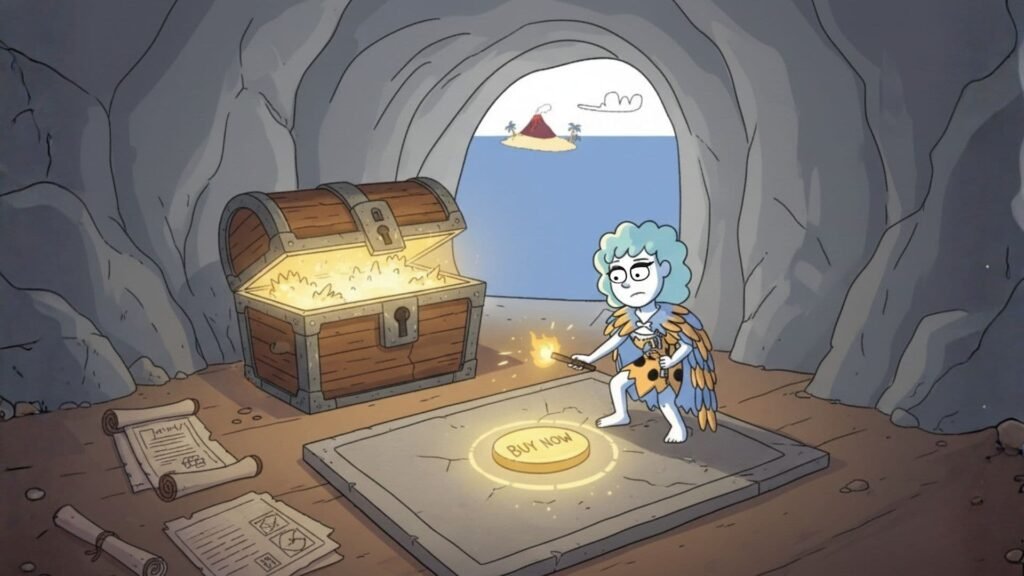
Proofseekers don’t want cheaper. They want safer. Here’s how to remove risk without cheapening your offer.
Agenda:
- The Problem Nobody Talks About
- The Five Stages Where Risk Shows Up Differently
- Why Discounts Backfire for Proofseekers
- The Seven Types of Risk Reversal Beyond Money-Back Guarantees
- How to Diagnose What’s Broken
- When Risk Reversal Backfires
- How to Prevent Guarantee Abuse
- The Bottom Line
And you did. You slapped a “100% Satisfaction Guaranteed” badge on your product page. Maybe you even moved it closer to the “Add to Cart” button like the conversion experts told you to.
But your Proofseekers—those analytical, research-obsessed buyers who spend three weeks comparing options—still aren’t converting.
Here’s why: You’re using the right tool at the wrong time.
The Problem Nobody Talks About
Most brands know guarantees work. The data proves it. Free returns increase conversion rates by 30-40%. Zappos built a billion-dollar business on a 365-day return policy.
But here’s what the gurus don’t tell you: knowing guarantees work isn’t the same as knowing which type to use, when to deploy it, and for whom.
Your Proofseekers aren’t ignoring your guarantee because they don’t trust it. They’re ignoring it because it’s answering the wrong question at the wrong stage of their decision-making process.
Let me show you what I mean.
The Five Stages Where Risk Shows Up Differently
Proofseekers move through five distinct psychological states before they buy. At each stage, they’re worried about different risks. Your guarantee needs to match the specific fear they’re experiencing right now.
Stage 1: Unaware
“Nothing’s wrong. Nothing needs fixing.”
The Risk They Feel: None. They’re in false safety mode.
What NOT to Do: Don’t mention guarantees yet. They’re not even convinced there’s a problem. A guarantee answers a question they haven’t asked.
What Actually Works: Problem pre-emption. Show them the hidden threat they can’t see yet. Ethical fear appeals that highlight long-term consequences of inaction.
Example: Instead of “90-day money-back guarantee,” try “The hidden cost of ignoring this problem: what happens in 6 months if nothing changes.”
Stage 2: Problem Aware
“Something’s wrong, but I can’t name it.”
The Risk They Feel: Confusion. They know they’re struggling but can’t diagnose the root cause.
What NOT to Do: Don’t overwhelm them with product guarantees. They’re not evaluating solutions yet—they’re trying to understand their problem.
What Actually Works: Diagnostic clarity. Help them name what’s broken. Reframe their self-blame. It’s not you; it’s your outdated tool.
Example: A checklist that helps them identify symptoms. No guarantees needed—just clarity.
Stage 3: Solution Aware
“Everyone promises the cure.”
The Risk They Feel: Distrust. They’ve been burnt before. Every solution sounds the same.
This is where risk reversal starts mattering—but not the way you think.
What NOT to Do: Generic “100% Satisfaction Guaranteed” means nothing to them. It’s cliché. They’ve seen it on scam sites and legitimate brands alike.
What Actually Works: Authority appeal. Show credentials, expertise, mastery. Use fact-checking to expose competitor myths tactfully. Reveal the mechanism—the “why” behind your solution.
Example: Instead of a generic guarantee, use: “Engineered by specialists. Here’s the mechanical truth about why generic solutions fail.”
Stage 4: Product Aware
“Why you vs. the cheaper one?”
The Risk They Feel: Analysis paralysis. They understand your solution but they’re comparing you to three competitors with spreadsheets open.
This is where contrast-based risk reversal works.
What NOT to Do: Don’t just say “risk-free trial.” They need proof, not promises.
What Actually Works:
- Side-by-side demonstrations that settle the debate
- Social proof from people who can’t afford to guess—professionals, experts
- Case studies with measurable outcomes
Example: “Watch the difference: Your product vs. Standard approach” with video proof. Then: “Trusted by credible adopters who researched heavily.”
Stage 5: Most Aware
“What if I choose wrong?”
The Risk They Feel: Loss aversion. They’re ready to buy but terrified of regret.
This is where traditional risk reversal finally belongs.
What NOT to Do: Don’t use scarcity tactics like “Only 3 left!” It triggers their scam radar. Don’t use discounts—it makes them question if you’re desperate or if quality is compromised.
What Actually Works:
- Risk reversal through guarantees, but make them specific
- Real scarcity based on capacity limits, not fake timers
- The Grand Slam Offer: bonuses plus guarantees without cheapening value
Example: “Try it risk-free for 60 days. If it doesn’t deliver the specific measurable outcome, return it. Keep the bonus regardless.”
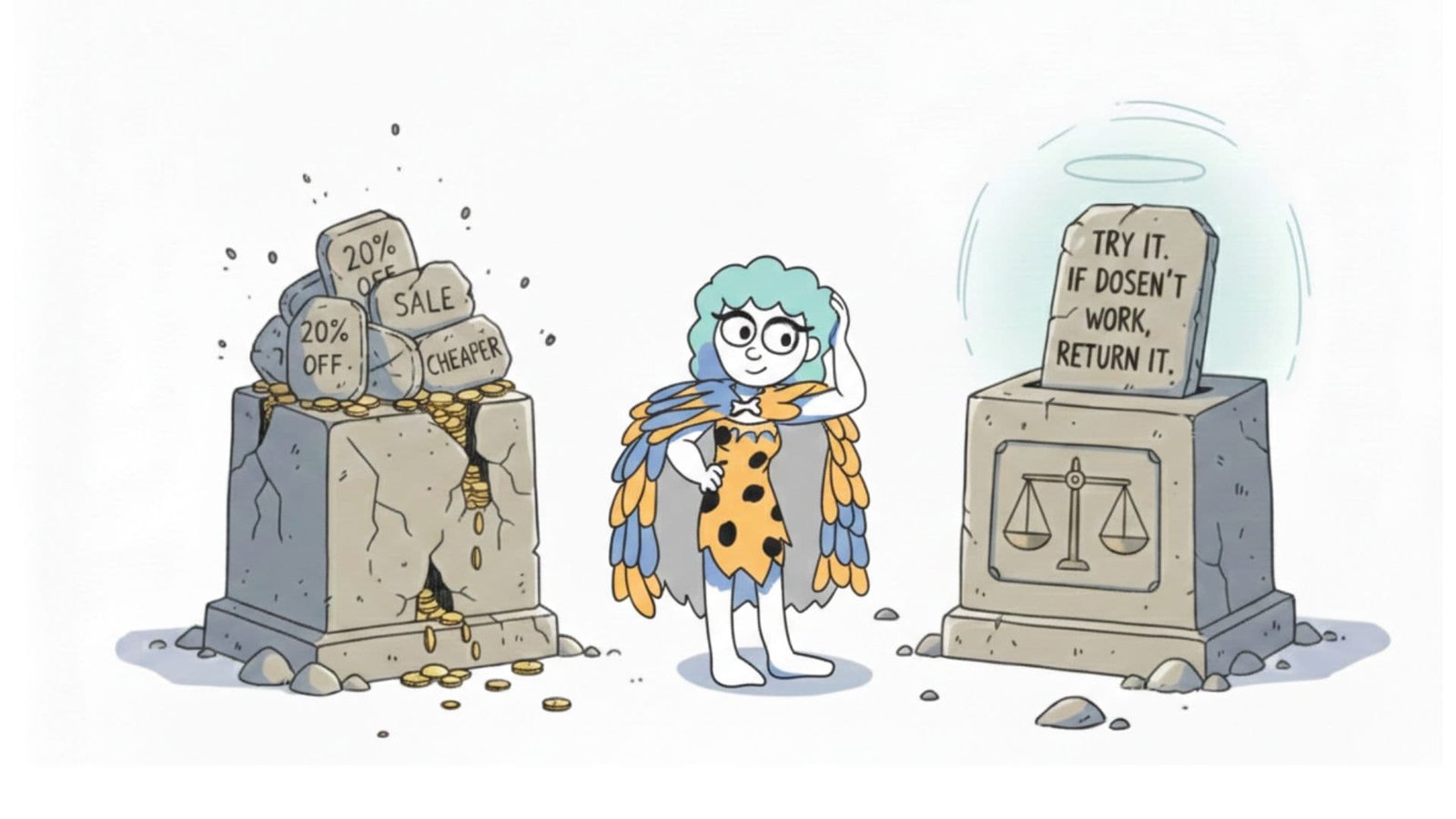
Why Discounts Backfire for Proofseekers
Here’s the financial reality nobody talks about:
Discounts:
- 100% margin loss on every sale
- Trains customers to wait for sales
- Reduces full-price conversions by 20-30%
- Signals desperation or quality concerns
Risk Reversal:
- Average return rate: 16.9%
- Logistics cost per return: 20-30% of product value
- Effective margin cost: approximately 3-5%
- 20 times more margin-efficient than discounting
Even better: Brands with generous guarantees see conversion lifts of 30-40%—the same as heavy discounting—but they only pay on actual returns, not every sale.
The Seven Types of Risk Reversal Beyond Money-Back Guarantees
Most brands know one type: the money-back guarantee. Here are six more that work better for specific situations:
1. Time-Based Guarantees
Standard: 30 days. Aggressive: 90-365 days.
Counterintuitive data: Longer guarantee periods actually decrease return rates. Why? When customers have a year to return something, the urgency to decide “do I like this?” fades. They integrate it into their life. By month 3, returning it feels like more effort than keeping it.
Best for: Products that require habit formation—supplements, software, fitness equipment.
2. Performance and Results Guarantees
“If you don’t see this specific result in this timeframe, full refund.”
This shifts the burden from subjective satisfaction to measurable outcomes.
Best for: Services, courses, supplements, anything with a promised outcome.
Critical requirement: Must include proof of compliance. Follow the protocol for 30 days, track your results, show us the data.
3. Keep-the-Bonuses Guarantees
“Return the main product, keep all bonuses for free.”
This removes the psychological sting of “losing” when someone returns something. They still gained value even if the core product wasn’t right.
Best for: Info products, courses, bundled offers.
4. Service-Level Guarantees
NOT about the product—about the experience.
“15-minute response time or we credit double the consultation fee.”
“Plain-English explanations or your money back.”
Best for: B2B services, consulting, anything where the delivery method matters as much as the deliverable.
5. Fit and Compatibility Guarantees
“Free exchanges until you find the right size.”
“Works with your existing setup or full refund.”
This acknowledges that failure might not be the product’s fault—it might be a mismatch. It removes the stigma of “choosing wrong.”
Best for: Apparel, technical products, anything with specification variables.
Data point: Size exchange programmes show 67% higher retention than standard returns.
6. Price-Match Plus Guarantees
“110% price guarantee: We’ll match any competitor and refund 10% of the difference.”
Removes the “am I overpaying?” risk entirely. Creates apathy—customers stop price shopping.
Best for: Commoditised products where price comparison is inevitable.
Real example: One operator reported this guarantee was only invoked twice in five years. The existence of it stopped the behaviour it promised to solve.
7. Unconditional and No-Questions-Asked Returns
The ultimate trust signal. No justification required. No hoops to jump through.
Best for: Brands with operational excellence and high product quality. Don’t attempt this if your product or service has quality issues—you’ll haemorrhage money.
How to Diagnose What’s Broken
Your guarantee is live. Your conversion rate hasn’t moved. What now?
Most brands guess. “Maybe the guarantee isn’t visible enough?” So they add more trust badges. Add more testimonials. The page becomes cluttered and conversion drops further.
Here’s how to diagnose the actual problem:
Signal 1: High Spend with Low Hold Rate
What it means: Your creative looks like a salesman, not an expert.
The pivot: Switch from hype to education. Use fact-checking content themes. Show authority, not excitement.
Signal 2: High Hold Rate with Low CTR
What it means: This is normal behaviour for Proofseekers. Don’t panic.
The pivot: Check your Save Rate. They’re bookmarking you for later research. Retarget with social proof ads to nudge the click.
Signal 3: High CTR with Low Purchase Rate
What it means: They clicked to learn, not to buy. Your offer doesn’t match their readiness stage.
The pivot: Change the offer from “Buy Now” to “Read the Case Study” or “Download the Comparison Guide.” Capture their email. Nurture them.
Signal 4: High Scroll Depth with Low Purchase Rate
What it means: They believe it works, but the price feels higher than the perceived value.
The pivot: Add a comparison chart. Add a risk reversal guarantee. Break down the cost per day or per use to reframe value.
Signal 5: High Purchase Rate with Low Returning Customer Rate
What it means: You delivered the product, but not the emotional payoff. They bought the item but didn’t buy the identity.
The pivot: Build community. Launch post-purchase email sequences that reinforce their smart decision. Create rituals around product use.
When Risk Reversal Backfires
Not every guarantee strategy works. Here are seven failure modes to avoid:
1. Over-Signalling Creates Distrust
Six trust badges, four guarantee seals, three security logos, and a “100% Satisfaction Guaranteed” banner?
You look desperate. Proofseekers’ subconscious reaction: “Why are they trying SO hard to convince me?”
The fix: One clear, specific guarantee. Remove the clutter.
2. Price Point Mismatch
If your product is under £20 and return shipping costs £8, your “free returns” policy is financially unsustainable.
The fix: “Keep it” refunds. Refund the purchase without requiring the return. Saves you logistics costs, builds goodwill.
3. Wrong Product Categories
365-day guarantees make no sense for perishable goods. You can’t return custom or personalised items—they can’t be resold.
The fix: Category-appropriate guarantees. For custom work: “Unlimited revisions until you’re satisfied” instead of “money-back guarantee.”
4. Ambiguous Terms
“Satisfaction Guaranteed” without clear terms is meaningless. Hidden conditions discovered at return time destroy trust permanently.
The fix: Crystal-clear terms. No fine print. No surprises.
5. Operational Incapacity
Offering generous guarantees when you can’t handle the volume creates delays, errors, and damaged reputation.
The fix: Only offer what you can operationally fulfil. Scale guarantees as you scale infrastructure.
6. Poor Product Quality
Aggressive guarantees on low-quality products equals bankruptcy.
The fix: Fix product quality first. Risk reversal only works if you’re confident in what you’re selling.
7. Attracts the Wrong Customers
“Wardrobers” buy for an event, then return. Serial returners without purchase intent. Professional refund scammers.
The fix: Tiered policies based on customer history. Loyal customers with low return history get generous terms. New customers get modest restrictions.
How to Prevent Guarantee Abuse
Generous guarantees attract some bad actors. Here’s how to protect yourself without punishing legitimate customers:
Strategy 1: £1 Paid Trials Beat Free Trials
Tiny commitment equals quality filter. Data shows 2 times retention rate on £1 trials vs free trials, despite lower signup volume.
Strategy 2: Verification Processes
For performance guarantees: require proof of following instructions. Legitimate customers have no issue complying. Bad actors won’t bother.
Strategy 3: Exchange Incentives
Make exchanges easier than refunds. Offer store credit bonuses. Keep revenue in your ecosystem.
Strategy 4: Clear Documentation Requirements
“Send us photos showing the specific issue” or “Fill out this 2-minute survey about what didn’t work.”
Creates natural friction for scammers. Legitimate customers are happy to help you improve.
The Bottom Line
Proofseekers don’t want cheaper. They want safer.
Discounts answer the question “Can I afford this?” Risk reversal answers the question “What if I’m wrong?”
These are not the same question.
Your Proofseekers are analytical. They’ve been burnt before. They’re researching you and two competitors simultaneously. They’ll pay a premium—but only in exchange for total peace of mind.
The guarantee you offer at Stage 5, Most Aware, should look nothing like the proof you show at Stage 3, Solution Aware. Slapping a generic “Satisfaction Guaranteed” badge on your homepage and hoping it works across all stages is like using the same headline for someone who’s never heard of you and someone ready to buy.
It doesn’t work.
Match your risk reversal strategy to the stage they’re in. Use the diagnostic signals to identify where they’re dropping off. Fix that specific friction point with the appropriate type of guarantee.
And for the love of margins, stop discounting when what they actually need is certainty.