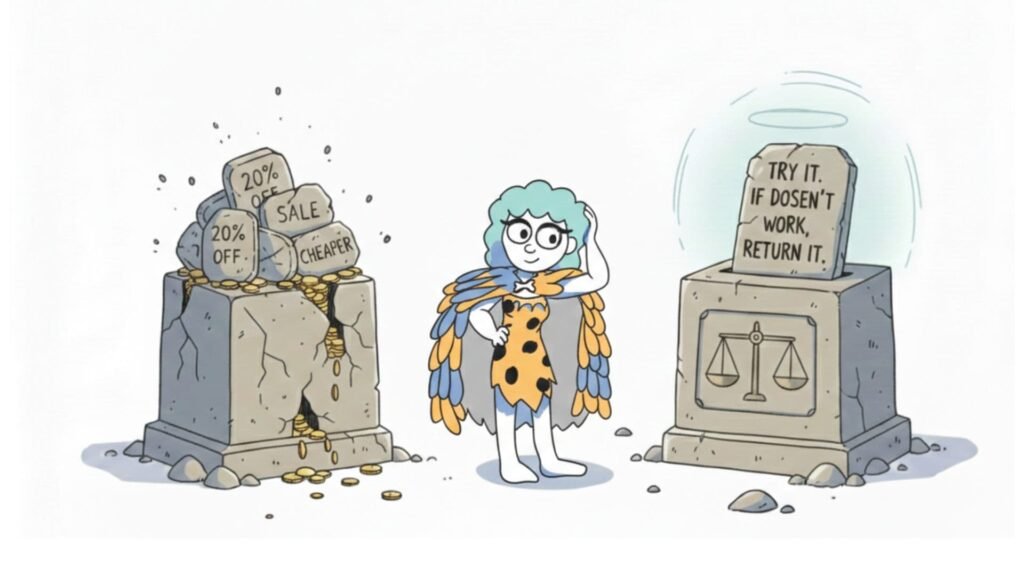
Visitors scroll, read, and compare, then leave. Learn the six risks that stop “proof-driven” buyers from converting and how to remove them.

Agenda:
- Understanding the High Engagement, Low Conversion Problem
- What’s Actually Happening in the Proofseeker’s Mind
- The Six Types of Risk Stopping the Purchase
- How to Diagnose Which Risk Is Blocking Conversion
- The Risk Removal Sequence That Actually Works
- Where Risk Removal Elements Need to Live on the Page
- Common Mistakes When Trying to Fix This Problem
- The Copy Framework for Risk Removal
- Can You Over-Do Risk Removal?
- The Role of Social Proof at This Stage
- What Conversion Lift to Expect
- The Diagnostic Question to Ask
- Moving From Interest to Purchase
The metrics look promising. Visitors are spending over a minute on product pages. Scroll depth is above 60%. They’re reading testimonials, checking specifications, browsing case studies.
Then they leave without buying.
This is the most frustrating conversion problem for brands selling to analytical buyers. High engagement should mean high conversion. But for Proofseekers, engagement only proves they’re interested. It doesn’t mean they’re ready to commit.
The gap between interest and purchase isn’t about trust. They believe the product could work. They’ve read enough to be convinced it’s legitimate.
The problem is risk. Specifically, the “what if I’m still wrong?” paralysis that stops analytical buyers right at the finish line.
Understanding The High Engagement Low Conversion Problem
First, let’s establish what this problem actually looks like in the data.
Normal ecommerce conversion rates:
- Average across industries: 1% to 3%
- Strong performance: 3% to 5%
- Top performers: above 5%
Engagement benchmarks:
- Healthy time on page: 44 seconds to 1 minute 22 seconds
- Normal bounce rate: 20% to 45%
- Strong scroll depth: above 60%
The problem scenario: Visitors spending over 1 minute on pages, scrolling past 60% of content, but converting at under 2%.
This isn’t a traffic quality problem. It’s not a trust problem. It’s a risk removal problem.
What’s Actually Happening In Their Heads
Proofseekers move through your content methodically. They read product descriptions thoroughly. They scrutinise testimonials. They check specifications against competitors.
By the time they reach the purchase decision, they’ve built confidence that the product could work. They believe the claims. They trust the brand is legitimate.
But then the internal monologue starts:
“This looks good. But so did the last solution I tried.”
“What if this is another £200 mistake?”
“Everyone says their product works. How do I know this one actually will?”
“If I buy this and it fails, I’ve wasted money AND I’m back to square one.”
“What will my colleagues think if I recommend this and it doesn’t work?”
This is loss aversion in its purest form. The fear of making the wrong choice outweighs the potential gain of making the right one.
Standard conversion optimisation advice says add testimonials, improve page speed, simplify checkout. But none of that addresses the real blocker: they’re paralysed by “what if I’m still wrong?”
The Six Types Of Risk Stopping The Purchase
Research identifies six distinct types of perceived risk that influence purchase decisions. For analytical buyers evaluating high-consideration products, understanding all six helps diagnose exactly what’s blocking conversion.
Financial Risk
The straightforward concern: wasting money on something that doesn’t deliver.
This isn’t about affordability. Proofseekers will pay premium prices. The fear is paying for something that fails to solve the problem, leaving them both poorer and still struggling with the original issue.
Performance Risk
The worry that the product won’t work as expected.
Proofseekers have been disappointed before. They’ve purchased solutions that promised results but failed to deliver. They’ve followed instructions perfectly and still didn’t see outcomes.
This creates deep scepticism. Every new solution must overcome the accumulated weight of past failures.
Time Risk
The concern about time invested in buying, learning, and implementing something that ultimately doesn’t work.
For Proofseekers, this compounds the financial risk. It’s not just the money spent on the product. It’s the hours spent researching, the effort invested in implementation, the opportunity cost of not pursuing alternatives.
A failed purchase means weeks or months of wasted effort, plus they’re back at the starting point.
Psychological Risk
The internal worry that choosing this product might harm their self-esteem or self-perception.
Proofseekers are analytical and pride themselves on making smart, researched decisions. Buying something that fails feels like a personal failure, not just a product failure. It creates the internal narrative: “I should have known better. I researched this thoroughly. How did I still get it wrong?”
This is why they re-read content multiple times. Each return visit is an attempt to achieve certainty that protects their self-image as a competent decision-maker.
Social Risk
The fear of losing social status or credibility because of the purchase.
If someone chooses to buy something outside their social norm, the perceived social risk is that colleagues, friends, or family would question their judgement. For B2B Proofseekers, this manifests as career risk: “What if I recommend this solution to my team and it fails? I’ll lose credibility.”
This explains why peer testimonials from similar buyers work better than celebrity endorsements. They need proof that people in their position made this choice and weren’t viewed negatively for it.
Privacy and Security Risk
The concern about payment safety, data protection, and whether personal information will be misused.
Research shows privacy risk has significant influence on purchase decisions for online buyers. Without visible security signals like SSL certificates, secure payment icons, and clear privacy policies, Proofseekers won’t even attempt checkout.
This is the foundation risk. If they don’t trust the site is secure, none of the other risk removal tactics matter.
The hierarchy for Proofseekers: Privacy risk must be eliminated first or nothing else functions. Financial, Performance, and Time risk create the “what if I’m wrong?” paralysis. Psychological and Social risk amplify the hesitation and explain the multiple return visits before purchase.
How To Diagnose Which Risk Is Blocking Conversion
Different risks require different solutions. Before adding random guarantees, identify which specific risk is causing the hesitation.
Signal: High time on page plus low add-to-cart rate
Diagnosis: Trust is built but risk hasn’t been removed. They’re reading everything, believing it could work, but paralysed by “what if I’m wrong?”
Primary blockers: Performance risk and Financial risk combined, often amplified by Psychological risk.
Signal: High scroll depth plus low purchase rate
Diagnosis: They’ve consumed all the information but can’t commit. They understand what the product does but doubt it will work for their specific situation.
Primary blocker: Performance risk, with Psychological risk creating the self-doubt loop.
Signal: High returning visitor rate plus low purchase rate
Diagnosis: They’re coming back multiple times, re-reading content, but can’t pull the trigger.
Primary blocker: All six risks compounding. Each visit represents another attempt to overcome doubt. The Psychological risk keeps them second-guessing. Social risk makes them wonder what others will think. Time risk makes them worry about implementation effort.
Signal: Strong click-through from ads but short landing page time
This is actually different problem: messaging mismatch. The ad promised something the landing page didn’t deliver. Not a risk issue, but a trust breach that activates all six risk types simultaneously.
Signal: High add-to-cart rate but high cart abandonment
Diagnosis: They’re ready to buy until they see final price or checkout requirements.
Primary blocker: Financial risk triggered at checkout, often by unexpected costs or complicated processes. Privacy risk if checkout feels insecure.
Signal: B2B buyers requesting multiple demos or proposals without closing
Diagnosis: They believe in the product but fear career consequences if it fails.
Primary blocker: Social risk. They need proof that recommending this won’t damage their professional reputation.
The Risk Removal Sequence That Actually Works
Removing risk isn’t about adding a generic “satisfaction guaranteed” badge. It requires addressing specific risk types in the right order at the right locations.
Step 1: Remove Privacy and Security Risk First
Before anything else, eliminate concerns about payment safety and data security.
Place security badges above the fold. SSL certificates, secure payment icons, privacy policy links.
Research shows privacy risk significantly influences purchase decisions for online buyers. Without visible security signals, nothing else matters because they won’t even attempt checkout.
This is the foundation. Skip this step and all other risk removal efforts fail.
Step 2: Address Performance Risk With Proof
This is where most brands fail. They claim their product works without proving it.
Performance risk requires demonstration. Case studies with measurable outcomes. Before and after comparisons with specific numbers. Video demonstrations showing the actual mechanism.
Generic testimonials like “this changed my life” don’t work. Proofseekers need “I tried X, Y, and Z which all failed because of A. This product works because it addresses A through mechanism B. After 30 days, measurable outcome C improved by specific percentage.”
The Flex and Iris eyeglasses case study demonstrates this perfectly: they combined a clear 3-step process explanation with risk-free shopping and visual demonstrations. Result: 75% conversion increase.
The process explanation addressed performance risk. The visual proof made it tangible. The risk-free element addressed financial risk.
Step 3: Neutralise Financial Risk With Specific Guarantees
Money-back guarantees work, but only if they’re specific and credible.
What doesn’t work: “100% satisfaction guaranteed”
Why it fails: Vague, overused, meaningless. Every scam site uses this language.
What works: “Try for 60 days. If you don’t see specific measurable outcome, return for full refund. Keep the bonus materials regardless.”
The specificity signals genuine confidence. The extended timeframe reduces pressure. Keeping bonuses removes the sting of “losing” if they return it.
Research on guarantee length reveals counterintuitive data: longer guarantee periods actually decrease return rates. When customers have a year to return something, the urgency to decide fades. They integrate the product into their life. By month three, returning feels like more effort than keeping it.
Step 4: Reduce Time Risk By Showing Implementation Ease
Proofseekers worry about investing weeks learning a complex system.
Address this directly:
- “15-minute setup”
- “See first results within 7 days”
- “24/7 support included”
Break implementation into visible steps. Show the timeline. Prove they won’t spend months struggling alone.
Include onboarding support details. Show how quickly others got to proficiency. Eliminate the fear of abandonment after purchase.
Step 5: Address Psychological Risk Through Validation
This is subtle but critical for analytical buyers who pride themselves on smart decisions.
They need evidence that choosing this product reflects well on their judgement and analytical skills.
Effective tactics:
- Highlight the research and development behind the product
- Show the sophisticated evaluation criteria that led to this solution
- Demonstrate that smart, analytical people chose this after thorough comparison
- Frame the purchase as the intelligent, well-researched choice
Language that works: “Developed through 200 hours of user research and testing” or “Chosen by analysts who evaluated 47 competing solutions.”
This validates their identity as someone who makes informed, intelligent decisions.
Step 6: Handle Social Risk Through Peer Proof
Proofseekers don’t want to look foolish. They don’t want to be the person who fell for marketing hype. They want evidence that people like them made this choice and maintained credibility.
Expert testimonials work best here. Not celebrity endorsements. Testimonials from credible professionals in relevant fields who evaluated multiple options and chose this one.
For B2B products, this means testimonials from people in similar roles at similar companies. For consumer products, it means buyers from similar demographic and psychographic segments.
Research from Nykaa shows how visible customer ratings help new customers overcome hesitation by providing social proof. But the type of proof matters. Aggregate star ratings help less than detailed reviews from similar buyers explaining their decision process.
The key element: show that respected peers made this choice and weren’t viewed negatively for it. This neutralises the “what will others think?” concern.
Where Risk Removal Elements Need To Live On The Page
Placement determines whether risk removal actually works. Each risk type has optimal locations for maximum impact.
Above the fold: Privacy and Security risk removal. SSL certificates, secure payment icons, privacy policy links. These must be visible immediately to eliminate baseline concerns about safety.
Next to call-to-action buttons: Financial risk removal. Money-back guarantees, risk reversal statements. Place them adjacent to “Add to Cart” or “Buy Now” buttons. This addresses the exact moment of commitment.
Research confirms authority statements near form fields and expert testimonials adjacent to submission buttons increase conversion.
Product page body: Performance risk removal. Demonstrations, case studies, results data. This is where they’re evaluating whether it actually works. Give them the evidence here.
Time risk removal also belongs here. Show implementation timelines, support availability, and ease-of-use proof points.
Testimonial sections: Social and Psychological risk removal. Feature peer testimonials from credible similar buyers. Include their reasoning process and professional credentials to validate the decision.
Checkout page: Privacy and Security risk removal repeated. Security badges again, satisfaction guarantees. Cart abandonment often happens here, triggered by final price or process complexity. Reinforce safety and reassurance.
Financial risk removal through clear pricing, no hidden fees, transparent total costs.
FAQ section: All six risk types addressed comprehensively. Detailed guarantee terms, return policies, implementation support, privacy protections, peer validation.
Proofseekers will read this thoroughly. Make it comprehensive and transparent. Hidden or unclear terms destroy trust. One study found that without trust signals, customers enter cognitive overload and abandon carts.
Common Mistakes When Trying To Fix This Problem
Brands recognise the high engagement, low conversion pattern. Then they make predictable errors trying to fix it.
Mistake 1: Adding More Testimonials Instead Of Better Guarantees
More social proof doesn’t solve performance risk or financial risk. It builds trust, which these visitors already have.
The solution isn’t more testimonials. It’s specific risk reversal mechanisms targeting the exact risks blocking purchase.
Social proof helps with Social and Psychological risk, but does nothing for Performance, Financial, or Time risk.
Mistake 2: Creating Urgency Through Scarcity
Countdown timers, “only 3 left” warnings, pressure tactics.
These backfire catastrophically with analytical buyers. Proofseekers interpret urgency as manipulation. Their scam radar activates immediately.
Research shows forced urgency triggers the opposite response: increased scepticism and delayed purchase whilst they investigate whether the scarcity is genuine.
Worse, it amplifies Psychological risk by making them feel pressured into a decision they haven’t fully evaluated, which conflicts with their self-image as thorough researchers.
Mistake 3: Over-Cluttering With Trust Signals
Six trust badges, four guarantee seals, three security logos, plus a satisfaction banner.
This signals desperation. Proofseekers think “why are they trying SO hard to convince me?”
Limit to two or three most relevant signals per page section. More creates suspicion, not confidence.
Over-signalling actually increases Psychological risk by making them question their judgement: “If this is legitimate, why do they need to work so hard to prove it?”
Mistake 4: Generic Instead Of Specific Language
“Satisfaction guaranteed” means nothing. “10+ years experience” proves nothing. “Trusted by thousands” differentiates nothing.
Every brand uses these phrases. They’re invisible.
What works: Specific mechanisms, specific outcomes, specific timeframes.
Generic language fails to address Performance risk because it provides no actual evidence. It fails to address Psychological risk because it doesn’t validate their analytical approach.
Mistake 5: Complicated Checkout Processes
Every extra click increases the chance of losing the sale. Research shows long, confusing checkout processes are among the biggest reasons for low ecommerce conversion rates.
Proofseekers have already fought through doubt to reach checkout. Don’t give them new reasons to reconsider.
Forced account creation, unexpected fees, unclear shipping costs. Each friction point revives the “what if I’m wrong?” doubt.
This triggers Financial risk through hidden costs, Time risk through complicated processes, and Privacy risk if data requirements feel excessive.
Mistake 6: Misaligned Messaging Between Ads And Landing Pages
If paid ads drive traffic but not conversions, the ad messaging likely doesn’t align with landing page content.
The ad makes a promise. The landing page discusses something else. This mismatch triggers distrust and confirms the Proofseeker’s suspicion that marketing is misleading.
This simultaneously activates all six risk types by destroying the foundation of credibility.
Mistake 7: Burying Guarantee Terms In Fine Print
Vague guarantees create more doubt than no guarantee at all.
If terms are hidden, unclear, or full of conditions, Proofseekers assume the guarantee is worthless. They’ll find the terms. They read everything. Hidden conditions discovered later destroy any trust built.
Make guarantee terms crystal clear, prominent, and genuinely unconditional.
Hidden terms massively amplify Financial and Performance risk whilst triggering Psychological risk through the feeling of being deceived.
Mistake 8: Ignoring Social Proof Quality
Using generic five-star ratings without context. Featuring celebrity testimonials instead of peer validation. Highlighting quantity over quality in reviews.
This fails to address Social risk because it doesn’t prove similar people made this choice successfully. It fails to address Psychological risk because it doesn’t validate the analytical decision process.
The Copy Framework For Risk Removal
Effective risk removal requires specific language structures, not generic reassurance.
For Privacy and Security Risk:
Structure: “Secure payment processing through trusted provider. Your data is protected by industry-standard encryption. Privacy policy here.”
Example: “All transactions secured by Stripe with 256-bit SSL encryption. We never store your payment details. Read our privacy commitment.”
For Financial Risk:
Structure: “Guarantee type for specific timeframe. If measurable outcome not achieved, exact refund terms. What they keep regardless.”
Example: “60-day money-back guarantee. If your conversion rate doesn’t improve by at least 15%, full refund. Keep all bonus training materials regardless.”
For Performance Risk:
Structure: “Number of users achieved specific measurable result in timeframe. Proof mechanism.”
Example: “247 D2C brands increased conversion rates by an average of 40% within 90 days. View case studies with before/after data and methodology breakdowns.”
For Time Risk:
Structure: “Implementation time. First results timeline. Support availability.”
Example: “15-minute setup. See measurable improvements within the first week. 24/7 support team responds within 2 hours.”
For Psychological Risk:
Structure: “Sophisticated evaluation process validates intelligent decision-making.”
Example: “Developed through 200 hours of user research across 50 companies. Selected by analysts who compared 47 alternatives using 12 evaluation criteria.”
For Social Risk:
Structure: “Credible similar buyers chose this because rational decision process led to positive peer perception.”
Example: “CFOs at 50+ enterprise companies evaluated six solutions. They chose this because the ROI calculation was transparent and the implementation didn’t require IT resources. Average team adoption rate: 94%.”
Can You Over-Do Risk Removal?
Yes. Too much risk removal triggers suspicion.
If every sentence includes a guarantee, every paragraph has a testimonial, and every section repeats security badges, analytical buyers question why so much convincing is necessary.
Research confirms customers who trust a website and feel confident in its security are more likely to convert. But over-signalling creates the opposite effect.
The balance: Address each risk type once, clearly, in the appropriate location. Then trust the buyer to process the information.
Proofseekers don’t need repetition. They need completeness. Cover all six risk types thoroughly but concisely.
Over-doing risk removal actually increases Psychological risk by making buyers question their judgement: “Am I missing something? Why are they working this hard to convince me?”
The Role Of Social Proof At This Stage
Social proof matters, but the type determines whether it addresses the right risks.
What works for Proofseekers:
Expert testimonials from credible professionals who evaluated multiple options and chosen this one based on rational criteria. Addresses Social and Psychological risk.
Peer reviews from buyers with similar situations explaining their decision process and measurable outcomes. Addresses Social, Psychological, and Performance risk.
Aggregate data showing number of users and statistical results, not just “trusted by thousands.” Addresses Performance risk through quantified proof.
Case studies with complete before/after documentation including what was tried previously and why it failed. Addresses Performance, Time, and Psychological risk by showing the intelligent evaluation process.
What doesn’t work:
Celebrity endorsements. Proofseekers don’t care that someone famous uses the product. Doesn’t address any of the six risks for analytical buyers.
Generic five-star ratings without context. They’ll read the one-star reviews first anyway. Doesn’t address Performance risk without specifics.
Vague testimonials about feelings rather than outcomes. “This changed my life” provides zero useful information. Fails to address Performance, Financial, or Time risk.
Influencer promotions. These trigger immediate scepticism about paid endorsement authenticity. Actually increases Social and Psychological risk by making them worry about appearing gullible.
Research on user-generated content shows when visitors encountered authentic UGC whilst browsing, conversion increased by an average of 3.8%. When visitors actively engaged with that content, conversions increased by 102.4%.
The key word: authentic. Proofseekers detect manufactured social proof instantly.
What Conversion Lift To Expect
Simple tweaks like improving page load speed or optimising product descriptions can generate 10% to 30% conversion increases.
Comprehensive risk removal strategies combining multiple elements typically deliver higher impact.
The Flex and Iris case demonstrated 75% conversion increase by combining process explanation, visual proof, and risk-free shopping. This simultaneously addressed Performance, Financial, and Time risk.
Realistic expectations for implementing the complete risk removal framework addressing all six risk types: 20% to 50% conversion improvement within 60 days.
But this assumes correct diagnosis of which risks are blocking purchase and proper implementation of stage-specific solutions.
Generic guarantee additions without strategic placement or specific language typically improve conversion by only 5% to 10%. The difference between weak implementation and strong implementation is understanding exactly which of the six risks your specific Proofseekers are experiencing.
The Diagnostic Question To Ask
Before implementing any risk removal tactic, answer this: What specific doubt is stopping them at the exact moment they leave?
The data tells you where they’re leaving. Time on page tells you they’re engaged. Scroll depth tells you they’re reading everything. Low purchase rate tells you something stops them at the decision point.
But which of the six risks?
Look at the supporting metrics:
Are they abandoning at the product page or the checkout page? Are they returning multiple times before purchasing? What’s the gap between add-to-cart rate and purchase completion rate? Do certain product categories convert worse than others? Are there patterns in customer support questions before purchase?
Each pattern points to specific risk types requiring specific solutions.
High product page engagement with low add-to-cart: Performance risk. They don’t believe it will work for them specifically. Potentially amplified by Psychological risk creating self-doubt.
High add-to-cart with high checkout abandonment: Financial risk triggered by final price or unexpected costs. Privacy risk if checkout process feels insecure.
Multiple return visits without purchase: All six risk types compounding. Each visit represents another attempt to overcome doubt. Psychological risk keeps them second-guessing. Social risk makes them wonder what others will think.
Category-specific conversion gaps: Different products trigger different risk perceptions. High-ticket items trigger Financial risk. Technical products trigger Time risk. Visible products like clothing or accessories trigger Social risk. Services trigger Performance and Psychological risk.
Pre-purchase support questions about implementation: Time risk dominates. They’re worried about complexity and learning curve.
Questions about what happens if it doesn’t work: Performance and Financial risk. They’re already anticipating failure based on past experiences.
Requests for peer references or client lists: Social risk. They need validation that others like them chose this successfully.
Moving From Interest To Purchase
The gap between engagement and conversion for analytical buyers isn’t about creating more trust. They already trust the brand is legitimate. They already believe the product could work.
The gap is about removing the “what if I’m wrong?” paralysis that stops them at the finish line.
This requires identifying which of the six specific risks trigger that doubt, then systematically addressing each risk type with specific, credible removal mechanisms placed at decision points.
Not generic “satisfaction guaranteed” badges scattered randomly. Specific guarantees with clear terms placed next to commitment buttons addressing Financial risk.
Not more testimonials. Performance proof with measurable outcomes from similar buyers. Peer validation that addresses Social and Psychological risk.
Not pressure tactics. Genuine risk reversal that makes the decision feel safe across all six risk dimensions.
Not hidden checkout requirements. Transparent, simple processes with visible security that eliminate Privacy risk whilst reducing Time risk.
Match the risk removal strategy to the risk type. Use the diagnostic signals to identify which of the six risks is blocking conversion. Implement solutions at the exact moment and location where each specific doubt appears.
Privacy risk gets addressed first, above the fold. Performance risk gets proven in the product page body. Financial risk gets neutralised next to the purchase button. Time risk gets reduced through clear implementation timelines. Psychological risk gets validated through sophisticated positioning. Social risk gets eliminated through peer proof.
High engagement proves interest exists. Strategic risk removal across all six dimensions converts that interest into purchase.
The brands that fix this problem don’t just add guarantees. They diagnose which specific risks are active, deploy targeted removal tactics for each risk type, and place those tactics at the precise moments when doubt emerges.
That’s the difference between 2% conversion and 5% conversion. Between visitors who read everything but leave, and customers who read everything then buy.